
Everything is symbolic.
I am going to reveal a secret to you.
The demand for purity, the pursuit of excellence, the non-negotiability of our honour so that we can look at ourselves in the mirror in the morning, physiological and spectral relevance, the quiet quality of the Maison’s lenses, Primum Non Nocere… It matters… It is vital. But it is not enough. And we knew it from the very beginning.
Because we are in the physical world.
The secret lies in the Maison’s frames.
Their compressed titanium temples are the physical embodiment of an irrepressible obsession: the intimate happiness of wearing an object that is stable, light and strong.
Their Japanese carbon fibre front is the paradox of unity achieved through fine multiplicity.
Their hinges, their nose-pad arms, are a subtle detail that few customers think about, reminding us that true success really lies in silence.
ADULT FRAMES.
500 tonnes of pressure on real titanium.
Unity is strength.
Cowardice is unacceptable.
CHILDREN’S FRAMES.
Stainless steel for the youngest.
For our children’s frames, we chose stainless steel: a sturdy, corrosion-resistant metal that makes fine, light and elegant glasses possible, able to keep up with their everyday adventures. As an indication, these frames suit children aged 5 to 9 best.
Then a child grows (fast), their face changes, their proportions change. That is why we also created 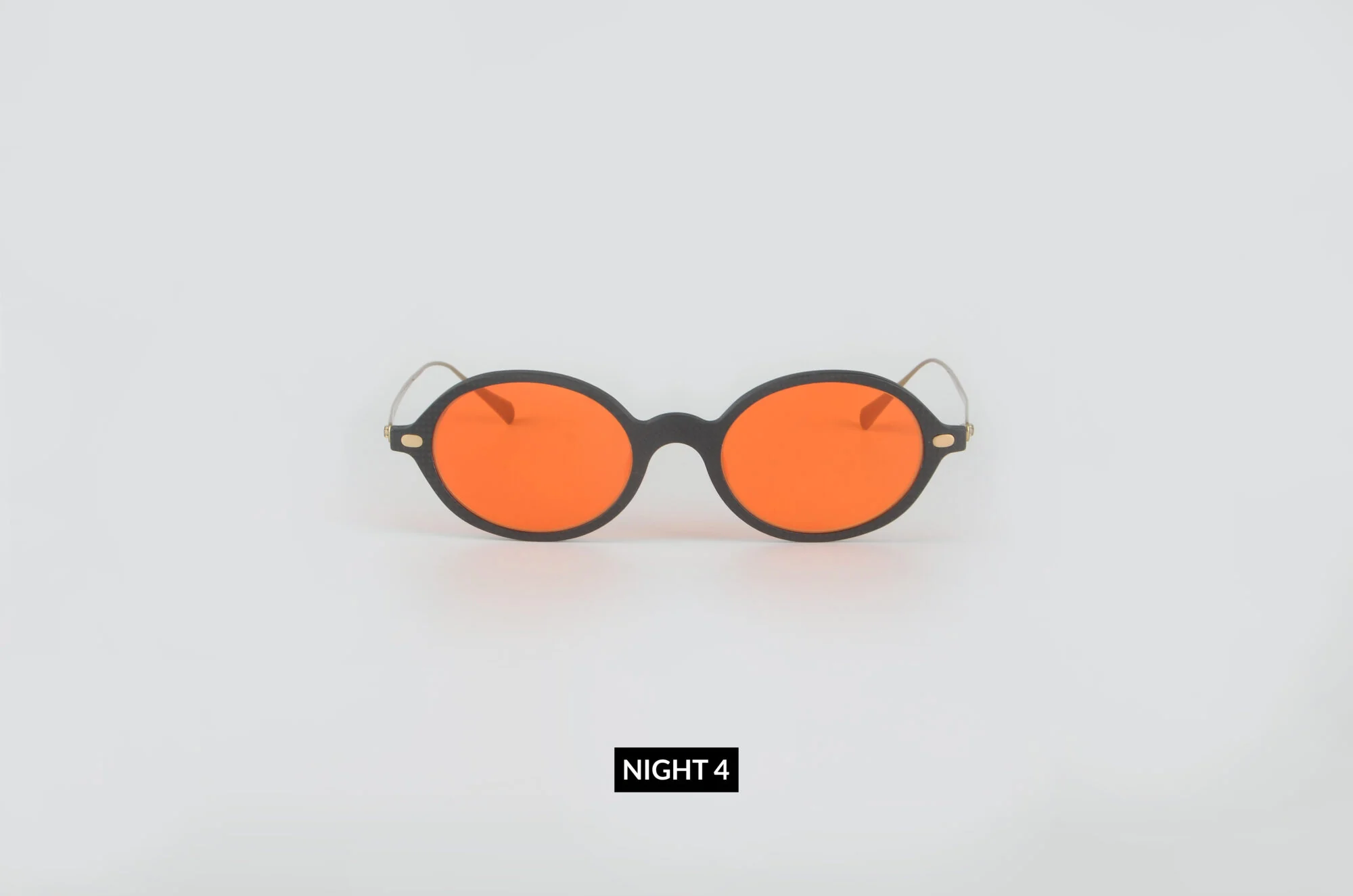
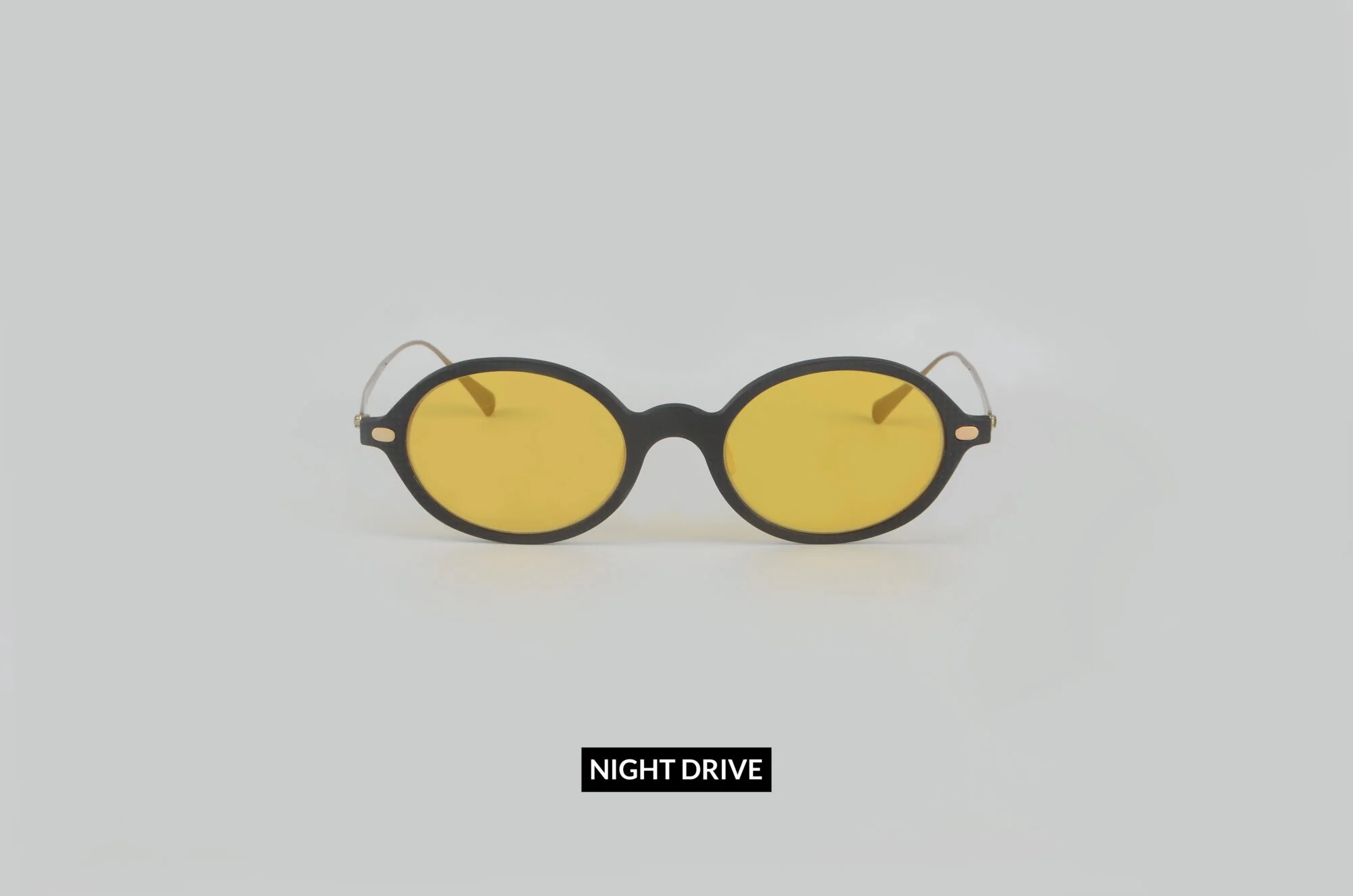
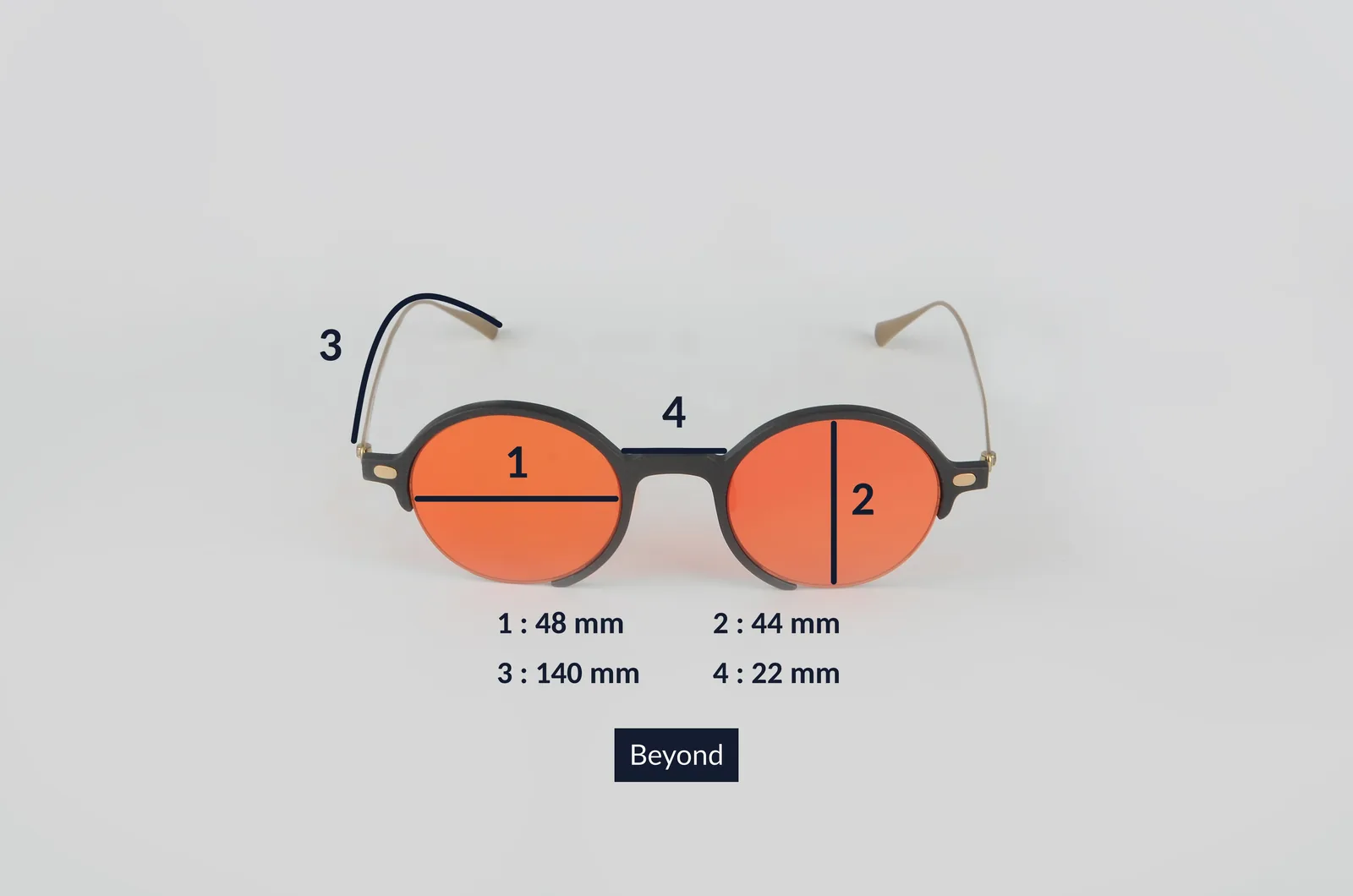
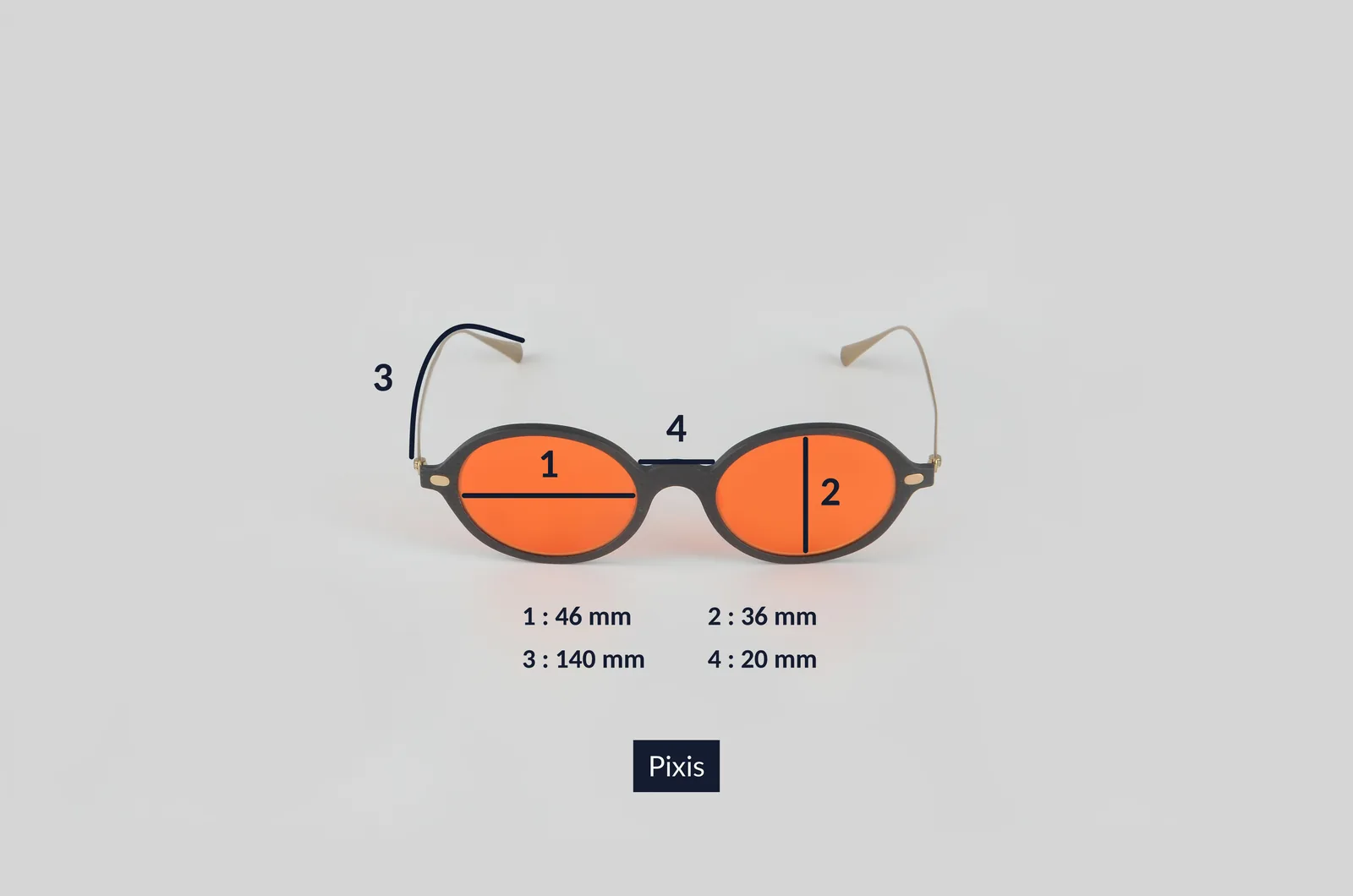 , for faces larger than those of our small children’s frames, but still too narrow for some adult models. As an indication, it suits children aged 10-12 best.
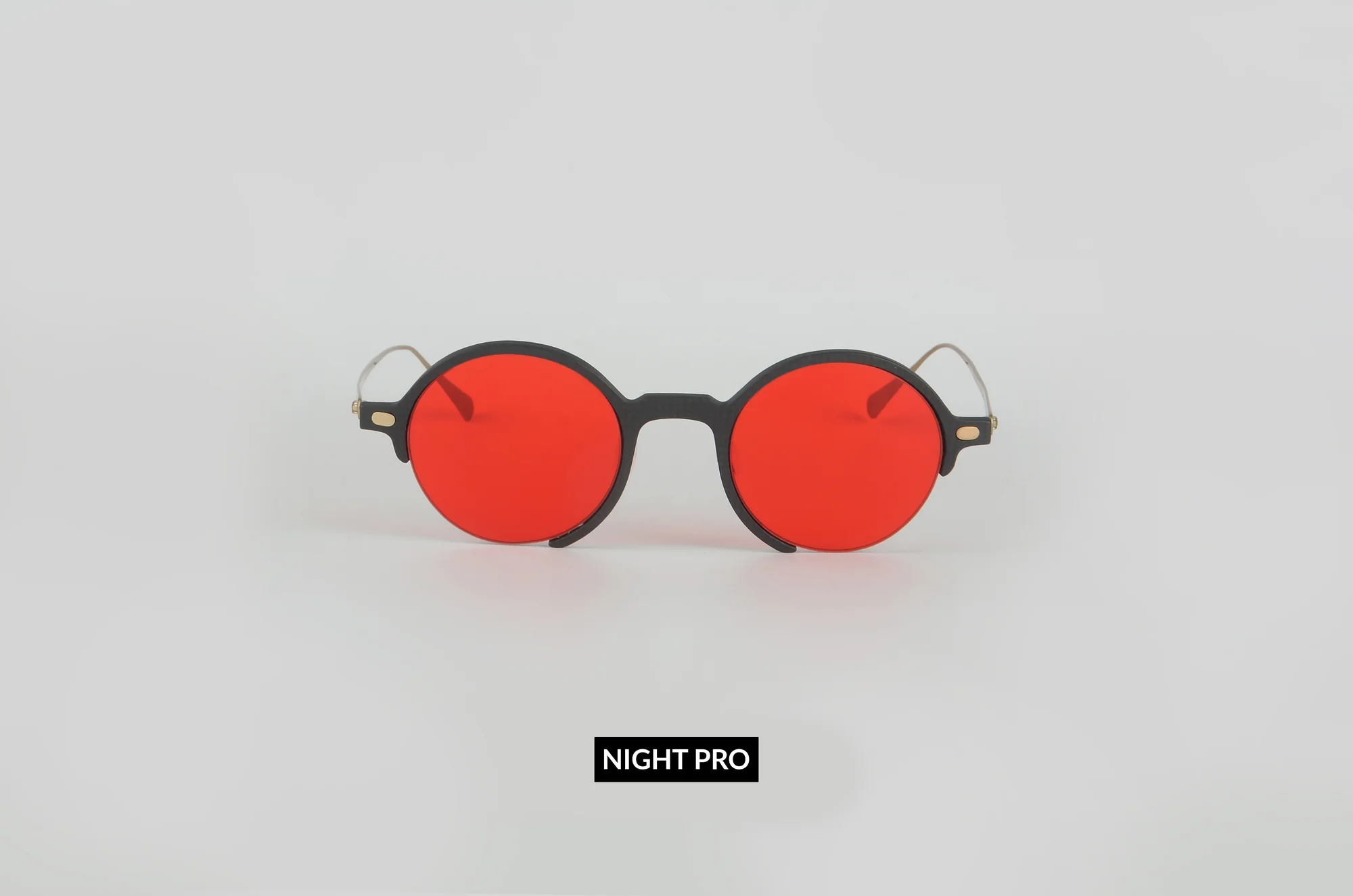
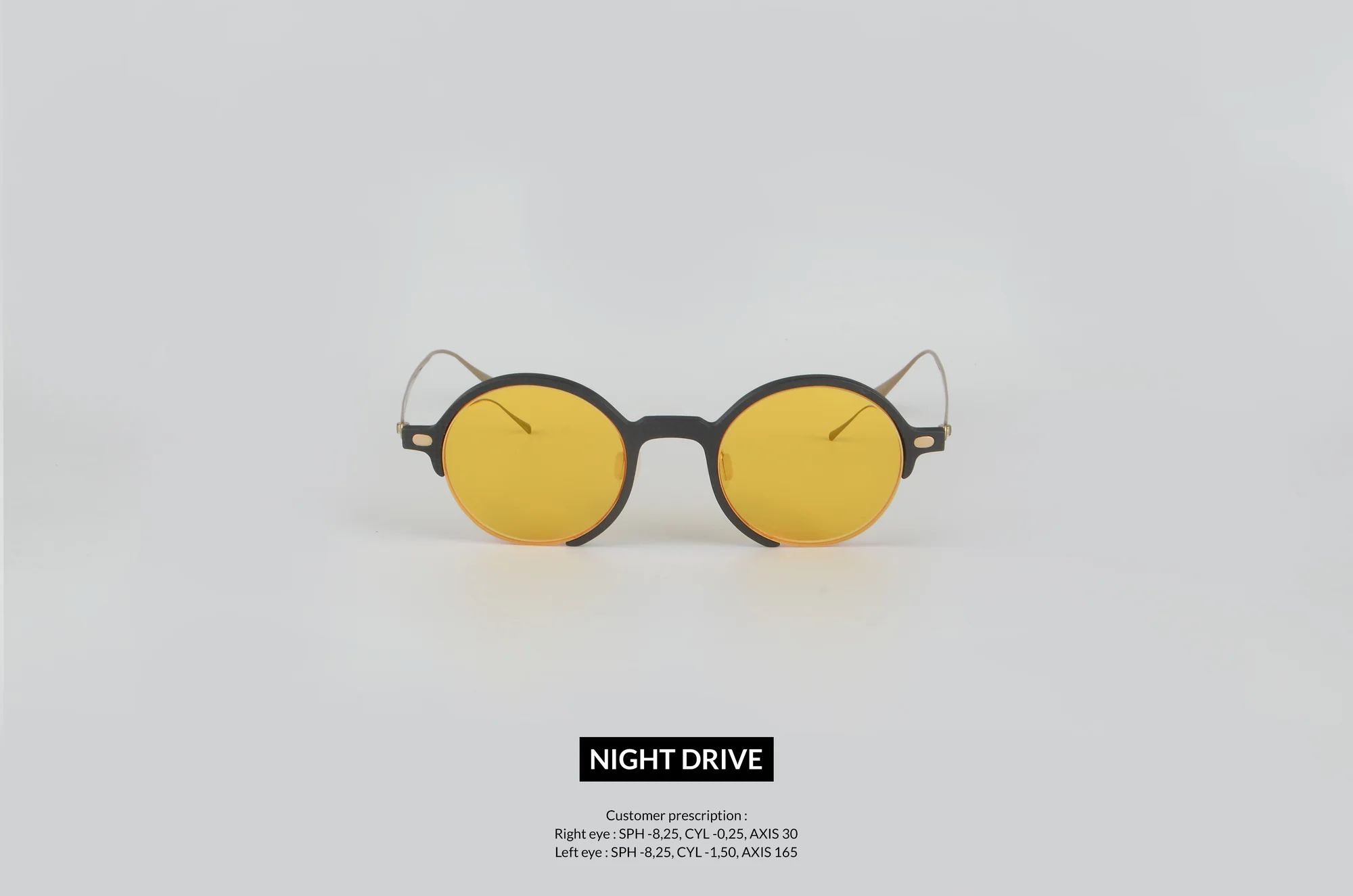
From 10-12, and sometimes from 9, some adult frames fit perfectly, such as 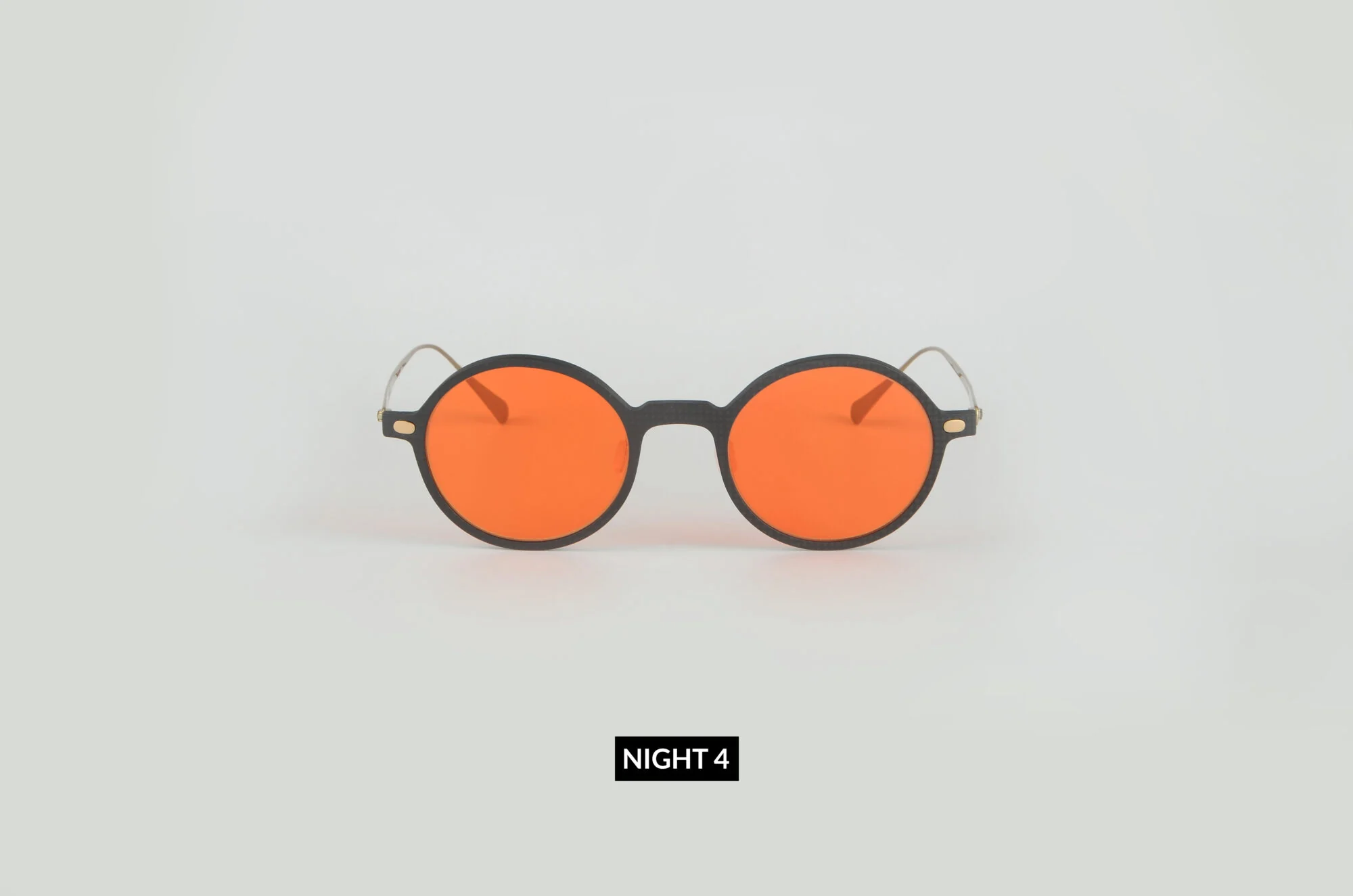
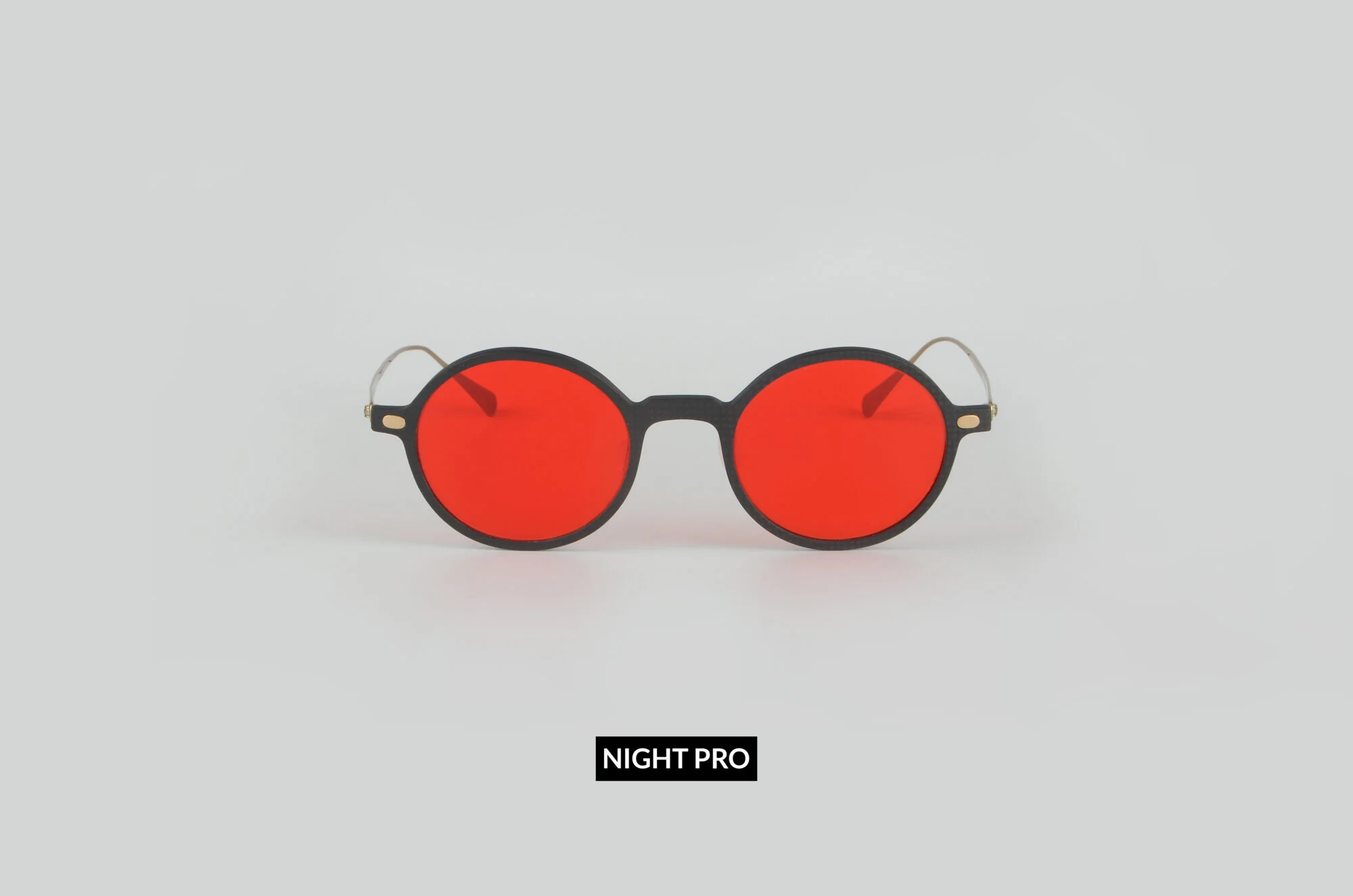
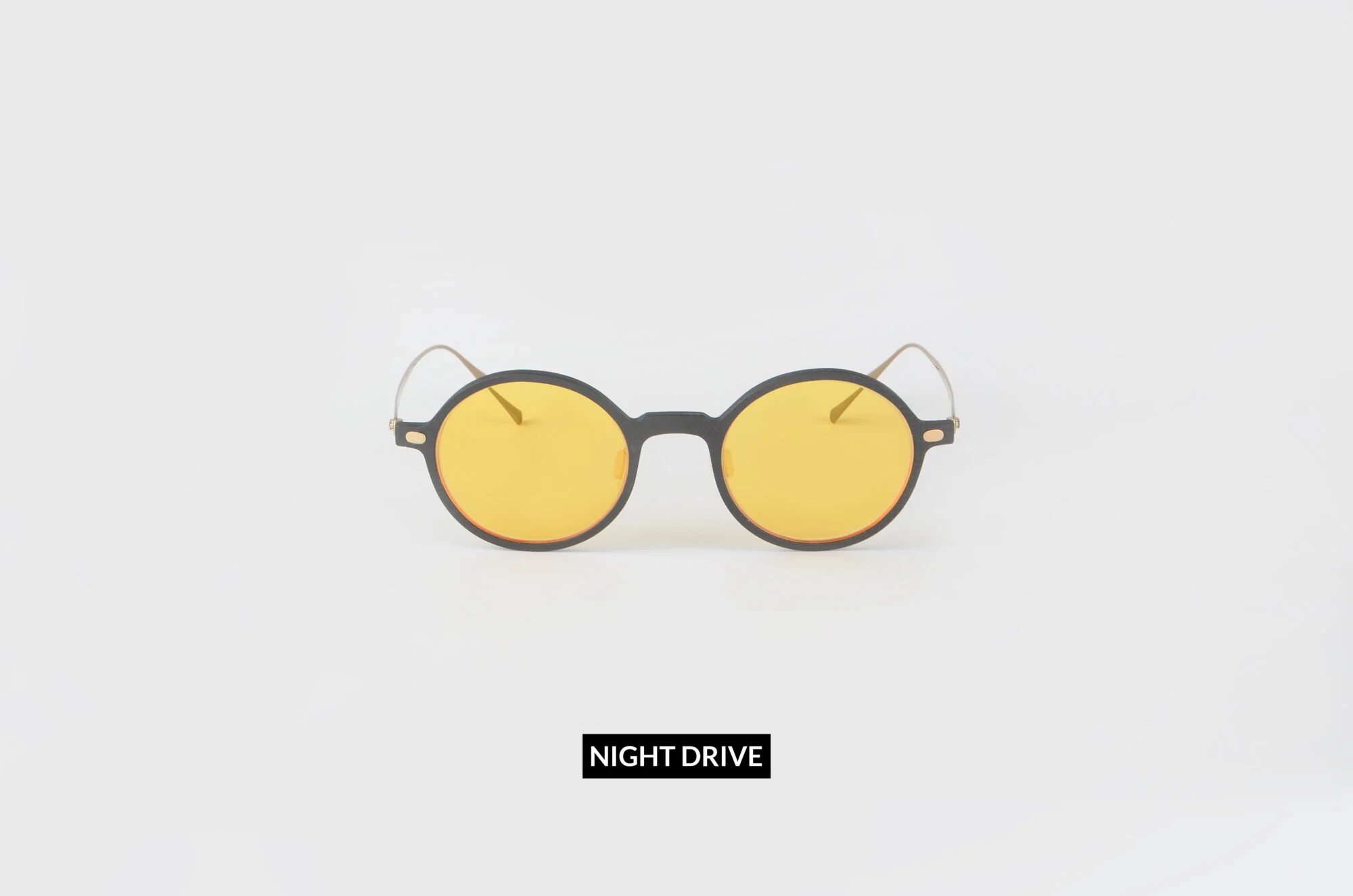
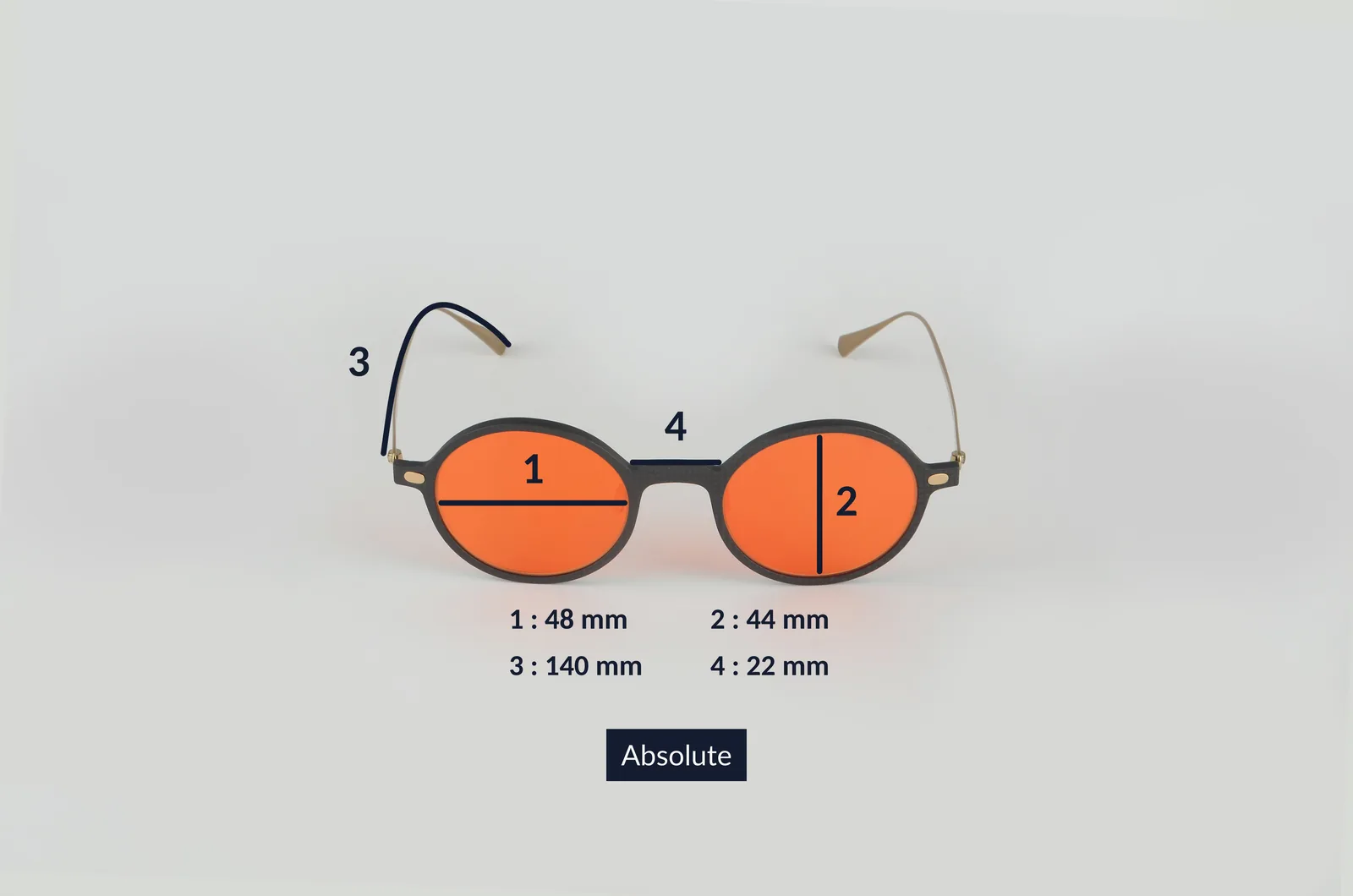 and
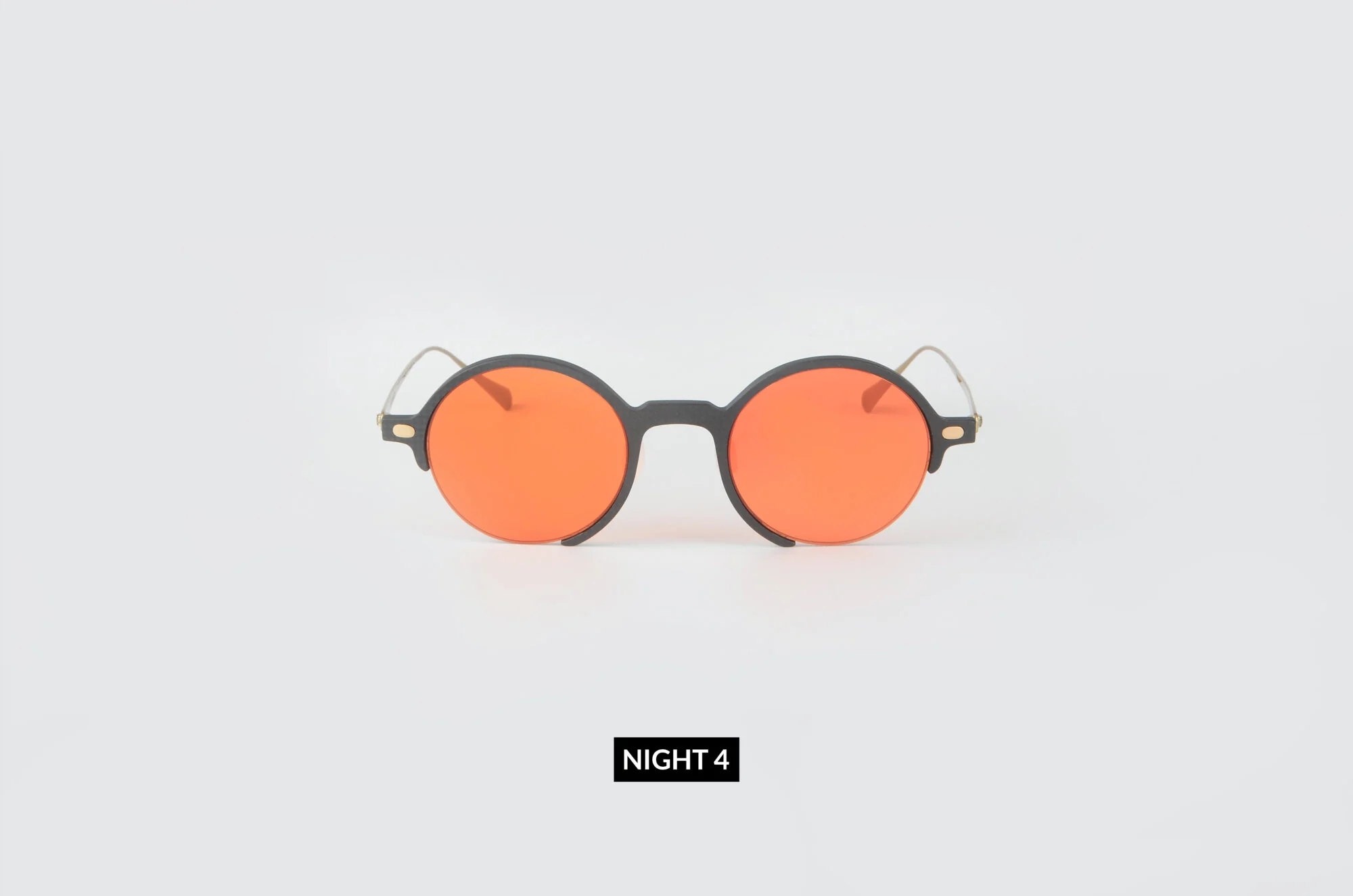
 .
We guide each family through this delicate choice with a personal consultation and our optician’s advice. We take into account the precise measurements of the child’s face, their features, but also their personality, tastes and wishes, to find together the frame that truly suits them. If they are ever not fully satisfied when the glasses arrive, we exchange them free of charge, and we always offer a refund under our Care Charter.
THE LENSES.
Spectral efficiency is good.
Letting natural light through during the day, intelligently blocking the relevant wavelengths during our night-time hours.
Very good.
But is harmony reached through a single physical property? Is it not reached through a whole bundle of characteristics that dance together to create usefulness and beauty?
We believe our progress comes from something few people talk about, because sometimes, when there is nothing to criticise, nothing is said.
That something is the exacting manufacture of our lenses.
From the material, to its machining, then its fitting into Loïs Kedochim frames. Experienced gestures which, away from prying eyes and marketing, find their victory only in the patience of each creation and then in the silence of customers.
The material.
In concrete terms, our organic lenses, that is all our basic lenses except DAY Mineral, are made of CR-39, the market’s high-end standard. This name, which sounds as if it came out of a laboratory, refers to an optical resin developed in the twentieth century, historically known for the quality of its transparency and its low chromatic dispersion.
An essential characteristic, unknown to the general public.
You have probably already looked through a lens that seemed perfectly transparent but which, along the edges of objects, showed slight coloured fringes. The world remains visible, of course, but its precision is compromised. This phenomenon is chromatic aberration.
To measure a material’s ability to limit this dispersion of colours, opticians use in particular the Abbe number.
CR-39 has an Abbe number of about 58.
Polycarbonate, widely used in eyewear, is generally around 30.
The difference is considerable in physical terms, which gives an unrivalled visual experience in the world of organic lenses.
Polycarbonate has a few qualities: it is light, particularly impact-resistant and allows thinner lenses for the same correction, at low cost.
But we look for the right material for the right function.
You will also find on the market lenses made of acrylic or multilayer constructions, notably based on Cellulose Triacetate (TAC).
We do not condemn them. We simply point out that there are, to begin with, different materials, and therefore different everyday sensations and different product durability. We refuse to let the lack of this knowledge, or a flattering word, an appealing colour, a too-promising price, or even mere spectral efficiency replace the real examination of a material.
And when your requirements call for thinner and even more high-end lenses, we turn to higher-index materials.
The return to purity.
Our customers choose DAY Mineral for its ability to transmit more of the natural light spectrum, especially ultraviolet and infrared, once they have understood how essential these are to Life on Earth, and therefore to our life.
But few of them know that with DAY Mineral, we went further than the simple transmittance of natural wavelengths. We wanted to go back to the material itself. To purified fused silica, its remarkable homogeneity, its optical clarity, this transparency that almost seems to make the lens disappear between our eyes and the world.
At a time when plastic has taken over the eyewear industry, we chose to explore the possibilities of mineral again. Not out of nostalgia, but out of exacting standards. To seek vision of great sharpness, exceptional visual comfort, and that almost forgotten feeling of contemplating the world without an intermediary. We no longer simply wanted to improve a lens. We wanted to recover the purity of sight.
The manufacturing.
Imagine a finished Loïs Kedochim frame, waiting for its two lenses.
You might think it is enough to cut two pieces of transparent material to the shape of the rims, insert them, and that is it. But precise geometry does not work like that. Carbon is very rigid: it is even one of the reasons why most of the opticians I visited in their shops in France and Switzerland refused to buy my frames, not for lack of quality, but because the time and experience a professional needs to fit the lenses into the front of these glasses are considerable. Time is money.
And our lenses always have a particularity: a curvature, a thickness, an axis, sometimes a corrective power of their own. This geometry can only be left to the mastery of real know-how.
In modern optical manufacturing, precision equipment makes it possible to work the surfaces when needed, then to cut the lenses to the exact outline of the frame. The material is measured, machined, checked. The edge of the lens is shaped so that it fits the frame without excessive stress, without needless play, without approximate fitting.
But a machine, however excellent, is not enough. For a perfectly made lens can still become a bad pair of glasses if it is poorly positioned in front of your eyes. For corrective lenses, the measurements specific to each of your faces must be respected: pupillary distance, centring, the prescribed axes where they apply. A few millimetres may seem insignificant, but they are not.
Where the public sees two lenses set in a solid frame, our team sees an opportunity. That of standing out through a succession of good decisions disguised as risk, good measurements, good checks, and good gestures.
And that is precisely what interests us.
Making sure the customer notices nothing.
No abnormal tension, no imbalance, no discomfort that forces you to take off your glasses to rest, no fitting defect that turns a beautiful object into a daily disappointment.
We want you to forget the manufacturing, for the frame to disappear from your concerns, but never from your pleasure in wearing it.
So that you can look at someone’s face, read a book, contemplate the sea, the mountains, or work for hours on your independent project, without wondering what is happening between your eyes and the world.
And if, several years later, you simply write to tell us that you still wear your glasses with the same happiness, then we will know why we refused certain savings.
Because our ambition is not to make glasses you will admire for ten minutes after receiving them.
It is to make glasses whose accuracy and value you will appreciate for a long time.
We have truly understood that real work does not ask to be applauded, it asks to be irreproachable, even when no one is looking at it, even when the one who enjoys it does not notice it.
That the idea be conceived with usefulness, purity and physiological coherence in mind, that it be followed by research, materials, and discreet but truly good gestures.
That is our idea of quality.
The kind that does not need Meta Ads to grow, the kind that does not need noise.