
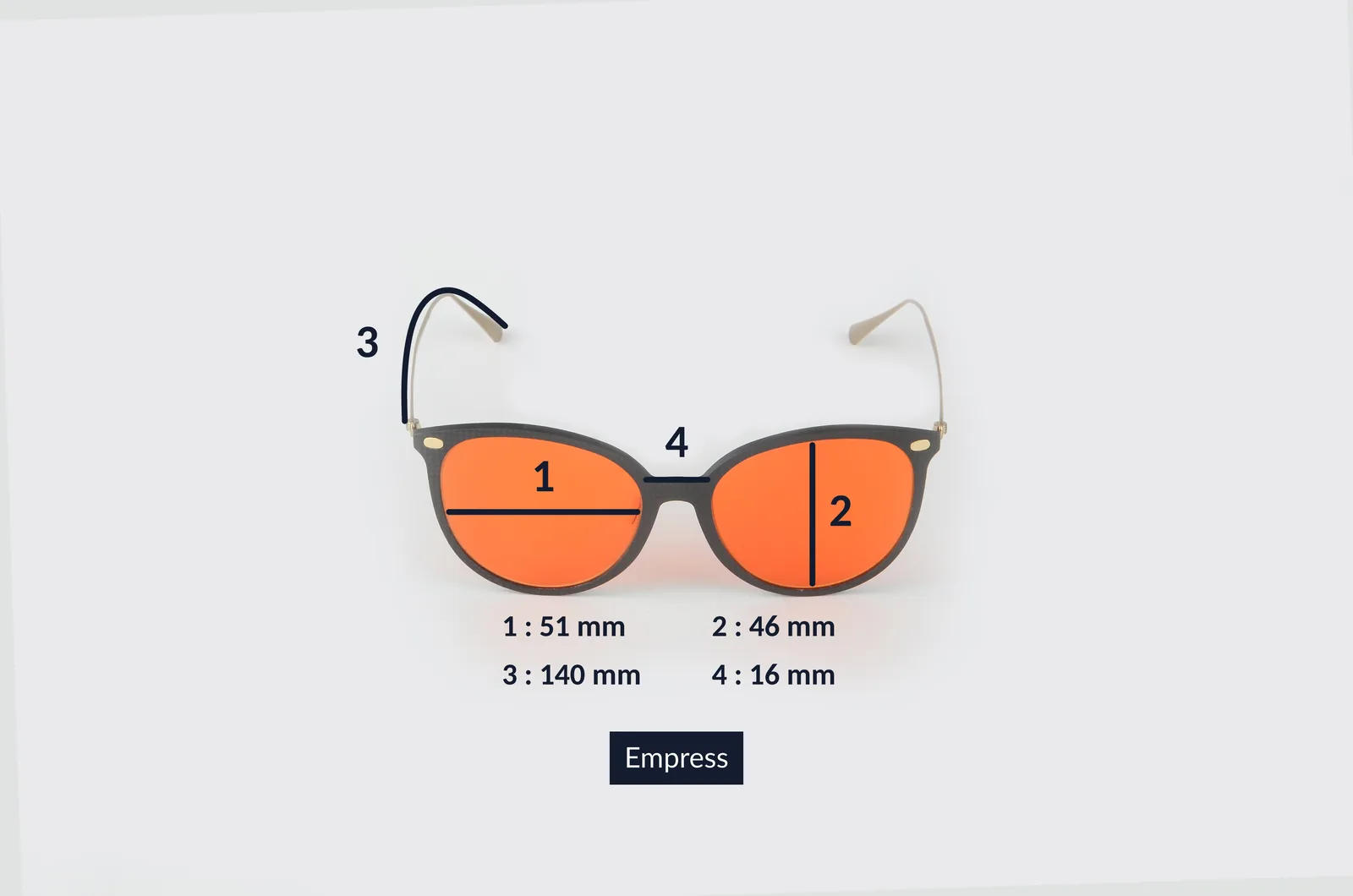
Empress
TIME TO DO THINGS RIGHT.
Our creations are prepared in series, then personalised for each order, each gift, each person.
The time needed to handle every detail, in the opposite logic to volume brands, means shipping is planned 80 to 100 days after the end of the sales period.
We contact you again before shipping to confirm your address and adapt the delivery to your availability and wishes.
- Payment in installments may be possible upon request.
- Shipping occurs after receipt of full payment.
We accompany our customers with an unwavering commitment to getting things right.
If, upon receiving their glasses, the frame does not fit or the lenses do not suit them, our 60-Day Taste Guarantee gives them the freedom to reconsider their choice.
So many customers who were initially skeptical have ultimately come to love their glasses that we willingly accept the possibility of losing a little money.
- Google reviews.
Treatment
CHF 210
A major arcana for power, creation and sovereignty.Mother of the world, regent, feline aura.
The temples: 500 tonnes on real titanium.
There is titanium, and there is titanium.
To understand what makes Loïs Kedochim temples special, discover our manufacturing choices.
The front: 3000 Japanese carbon filaments woven tightly into each strand.
Then we interlace each strand with the adjacent ones.
A rare paradox worth noting: while an object made of a single component usually withstands time and impacts better, here the multiplicity of fibres offers stability, coherence, and a strength that exceeds many steels of equal mass.
The hinges and the nose-pad arms: no screws.
A seemingly trivial choice, something easy to remove.
The reality is quite different, and this choice serves real purposes: that your glasses sit perfectly on your face through the strength of their hinges, that they are free of anything superfluous, and above all, that you keep them for a long time without having to contact us again about a lost screw or a loose hinge.
The clear lenses of the classic blue-light brands and opticians seem effective, according to their laser test.
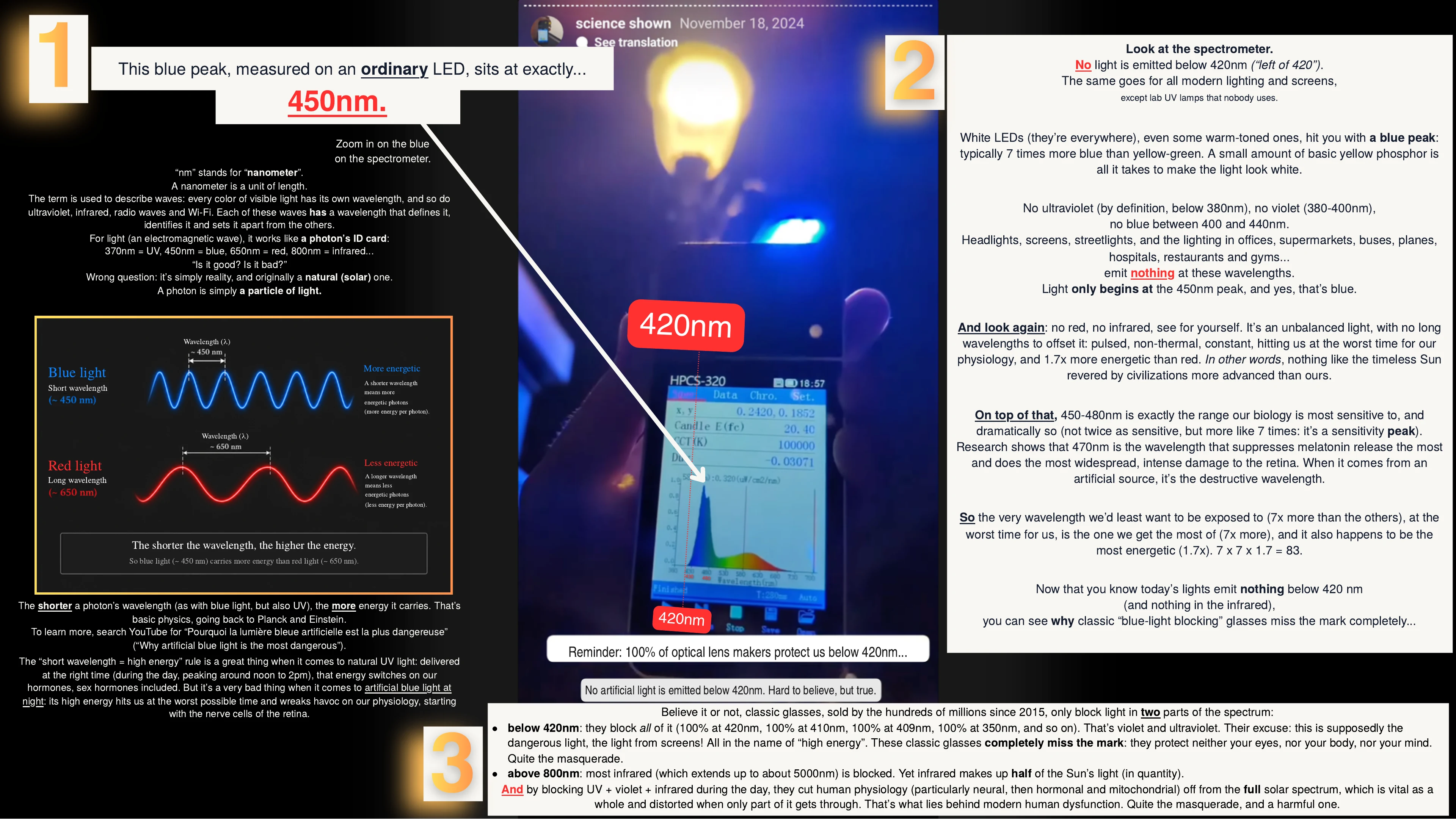
Their laser is at 410nm. Not above, not below: 410.
Their lens blocks below 420nm (that is, it blocks 420nm, 419nm, 418nm, …, 410nm, 409nm, and so on), which makes it effective on the laser.
Except that the light from screens, headlights, streetlights, lighting, etc. is between 450 and 750nm. 0% below 430nm. Unbelievable but true.
You can understand it in one picture, by clicking here.
What makes Loïs Kedochim glasses unique?
I really am in front of screens all day long, can I protect myself from the artificial light in front of my eyes?
Remove the layer of pseudo-knowledge, of fear, and of laziness.
Now, listen to your intuition.
Do you think a spectacle lens can tell the difference between the sun and a screen?
A lens in front of your eyes during the day whose property is to block “blue” light will also block the natural rays of the sun, and in particular those that are good for your nervous system: it blocks 100% of ultraviolet, most of the infrared, and - if it really is anti-blue-light -, it also blocks at least violet and blue. This has harmful effects on your health; you can read our scientific library, which is partly devoted to it.
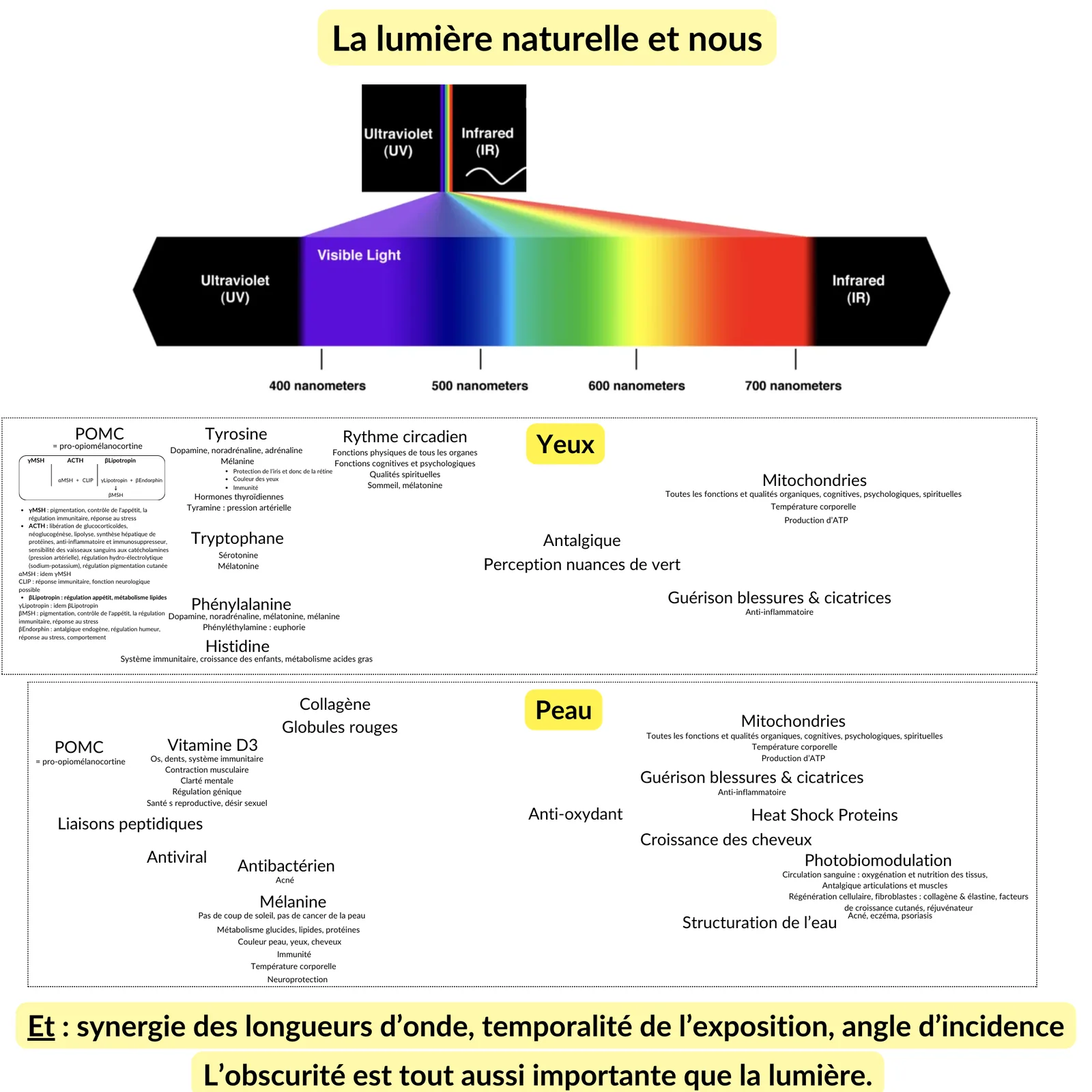
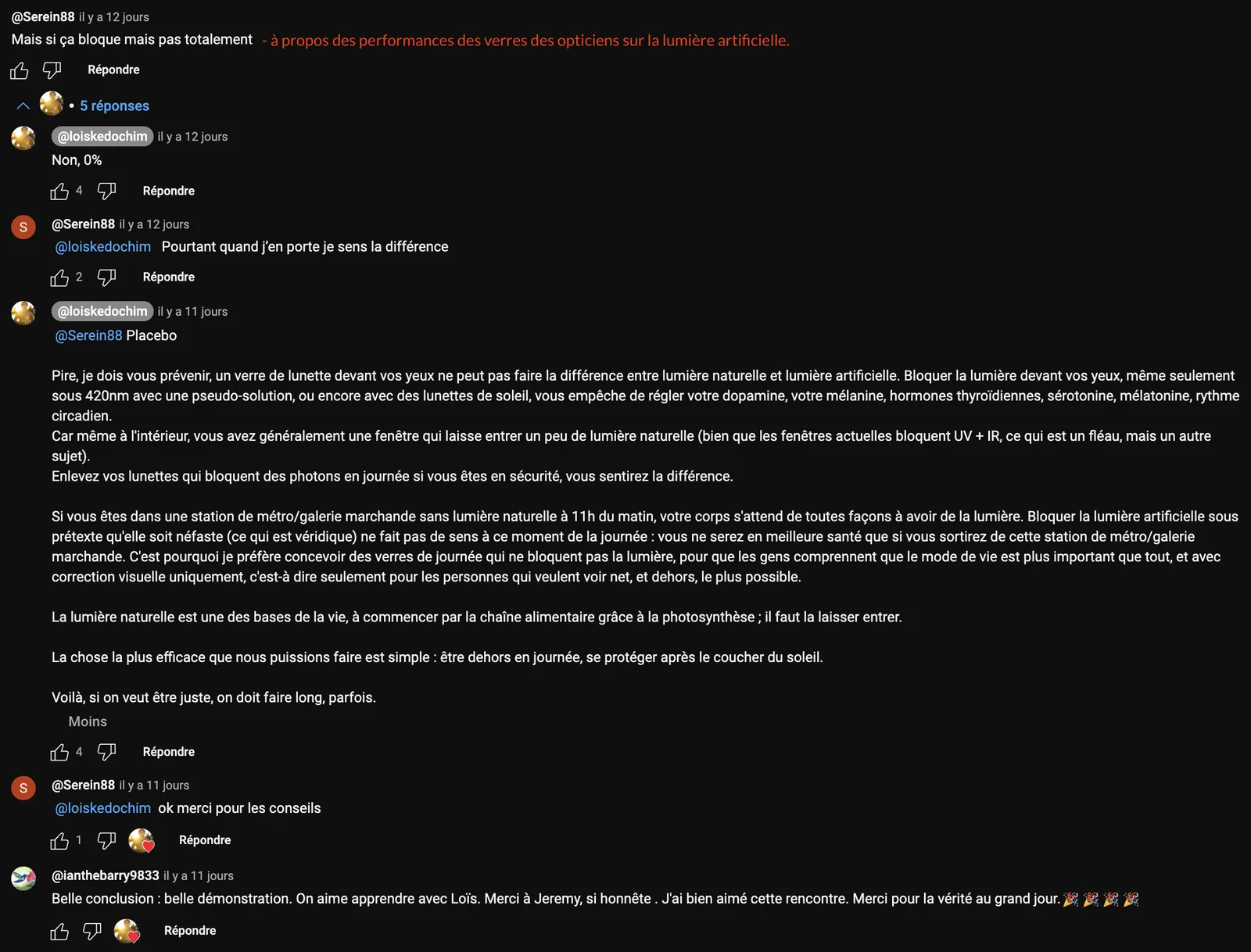
A lens that blocks light in front of your eyes during the day makes you ill.
You do not feel it strongly enough to lose your trust in the established optical or ophthalmological authority, but it is a bio-electromagnetic reality, so much are your eyes an extension of your brain, and so much does your nervous system dictate your hormonal, mitochondrial, dopaminergic and serotonergic efficiency.
During the day, do not block light. A bandage in front of your eyes will solve nothing. Your body expects light during the day. Real light. Turn your life towards this source of life, whatever it takes.
During your night-time periods, at the cost of losing part of the light of the moon and the stars, control your whole light environment wherever you are, by intelligently blocking the artificial light in front of your eyes: on the wavelengths actually emitted. You will feel better the following days, that way.
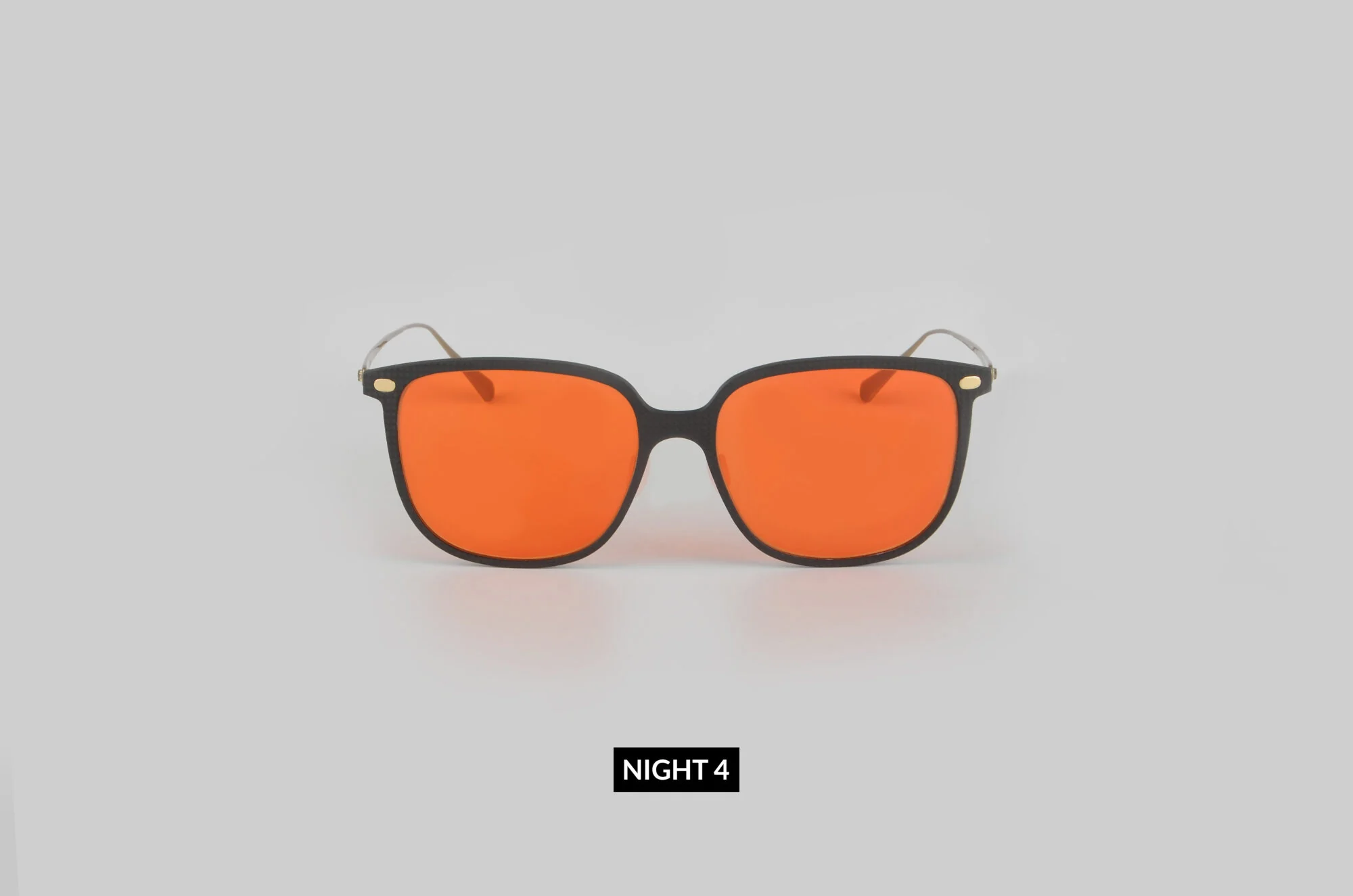
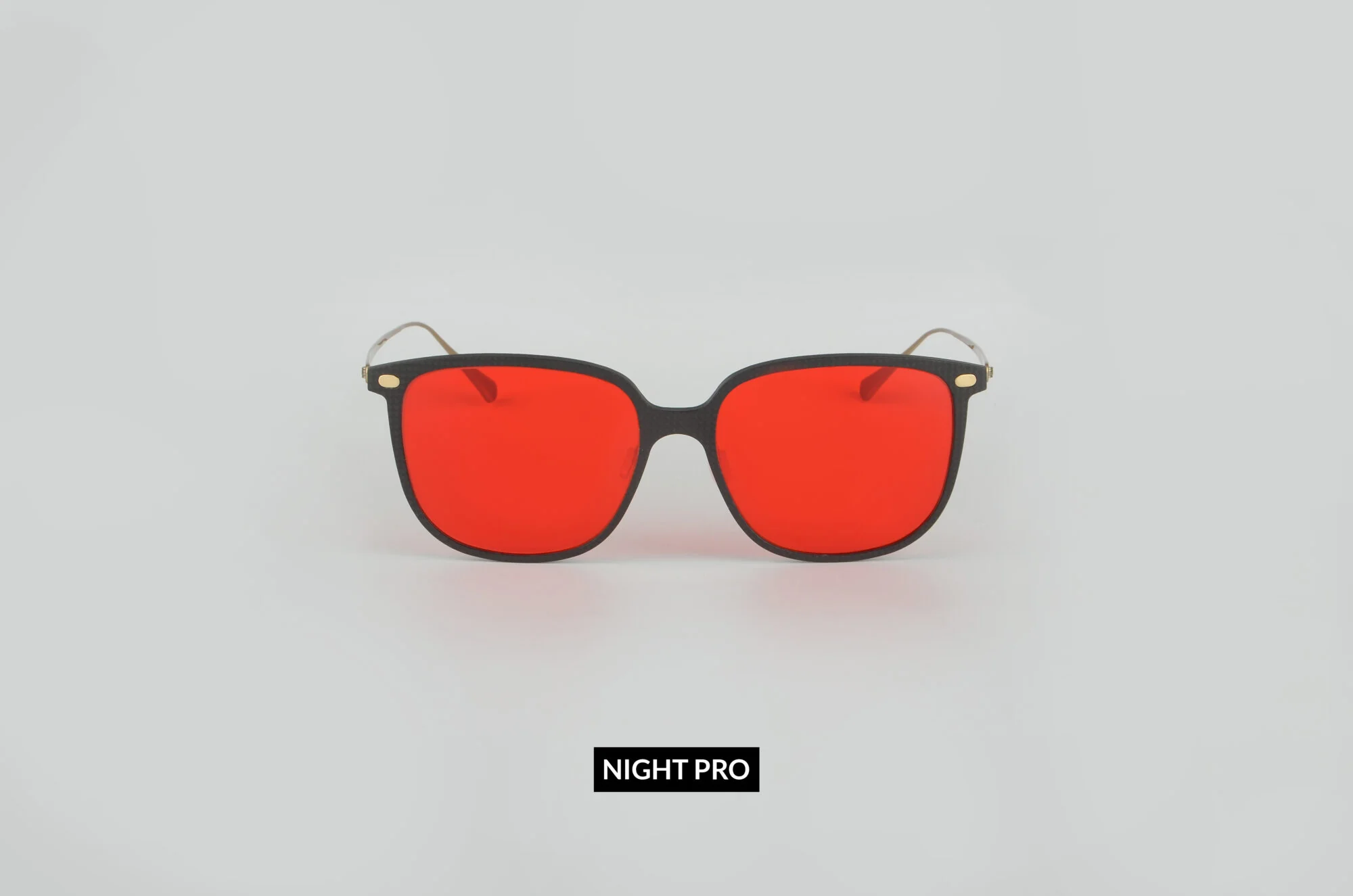
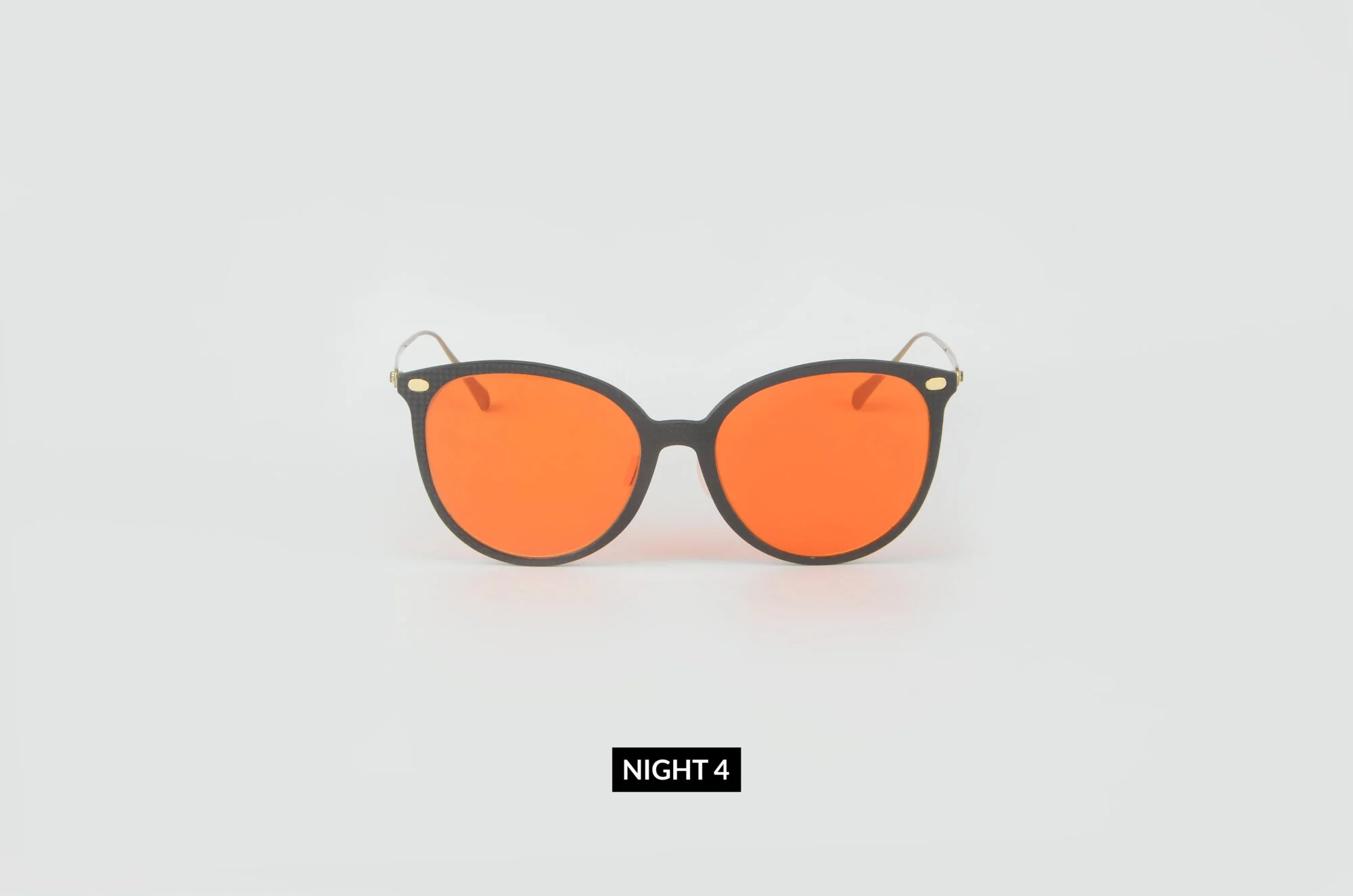
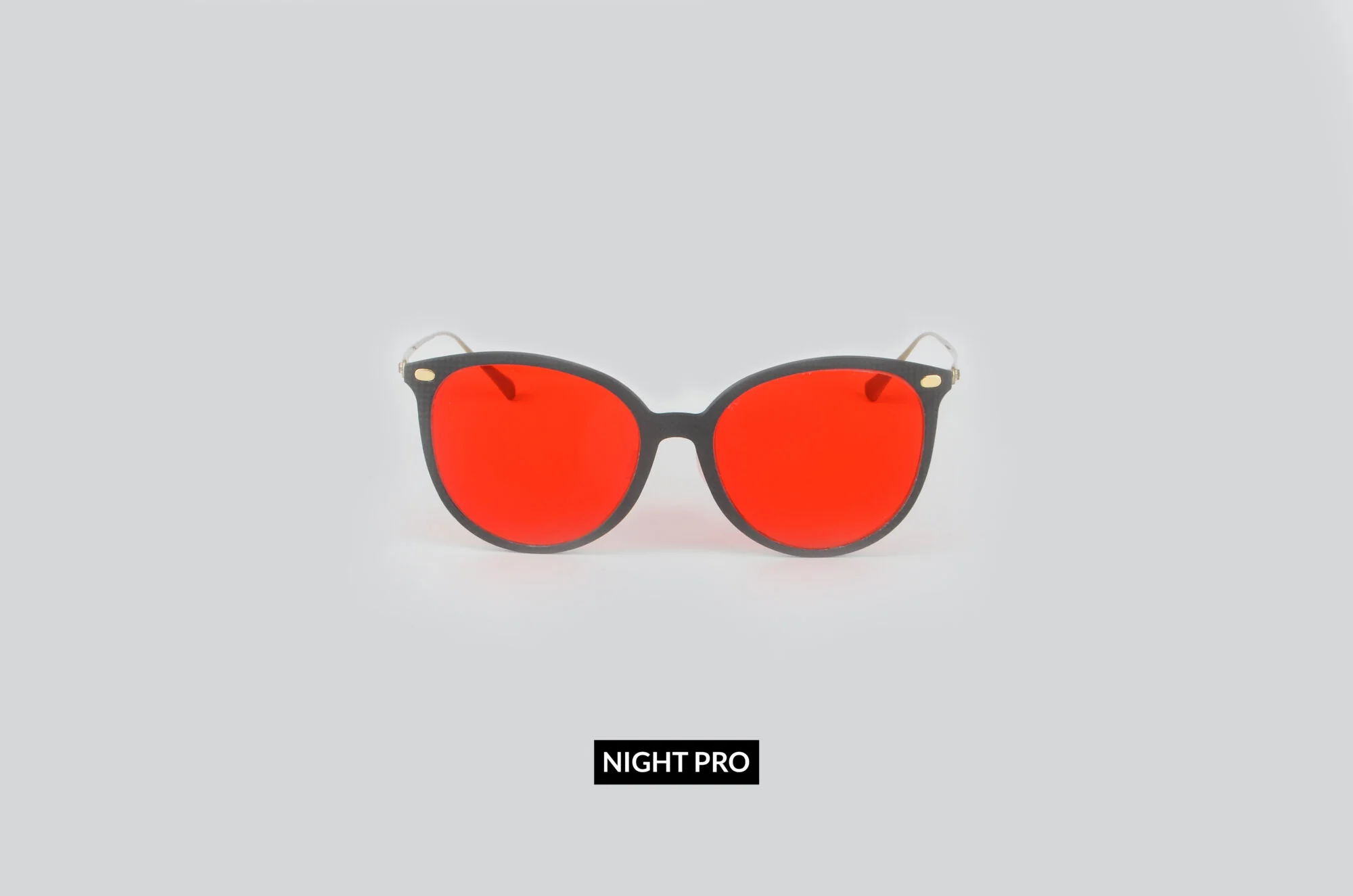
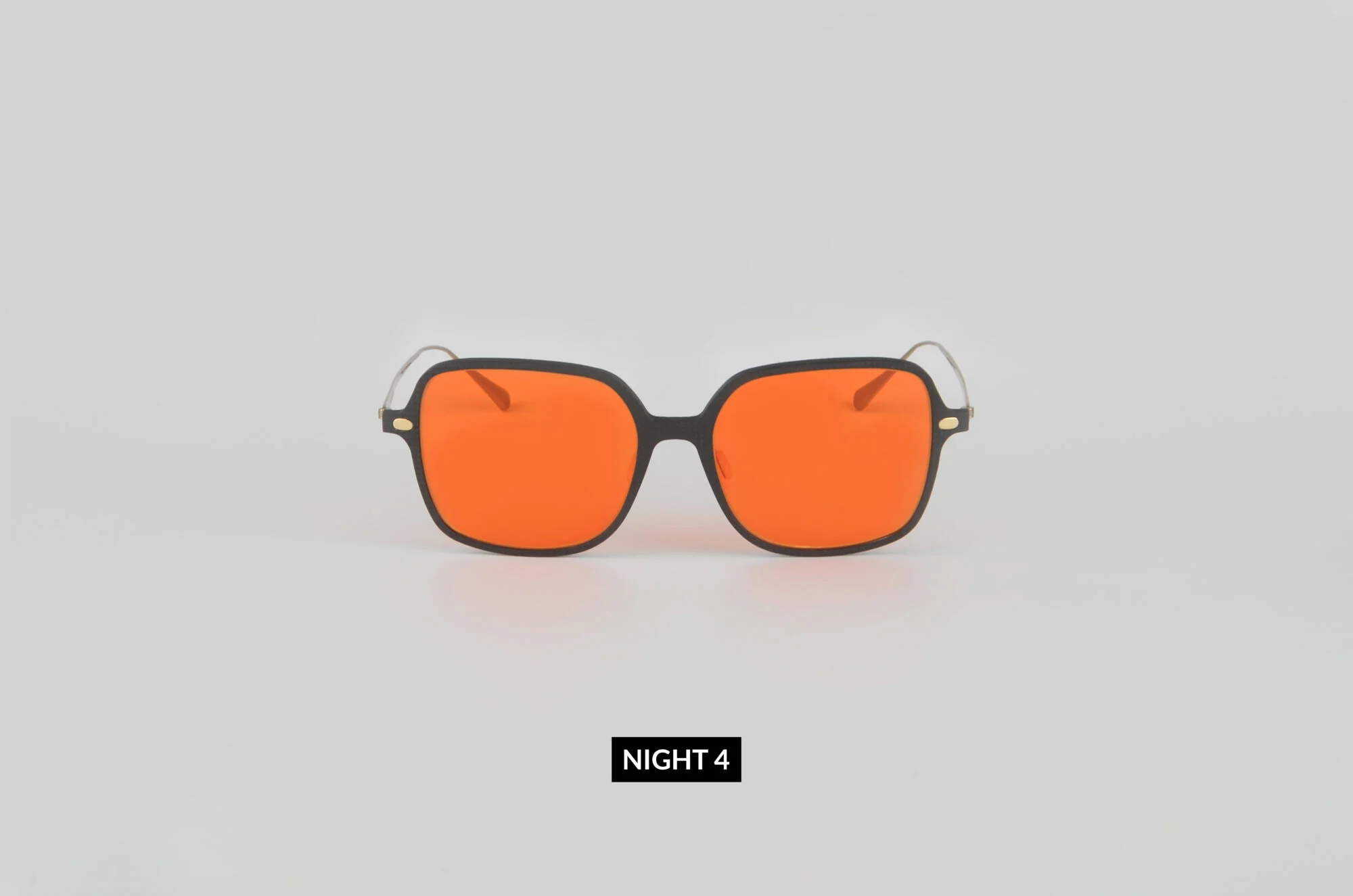
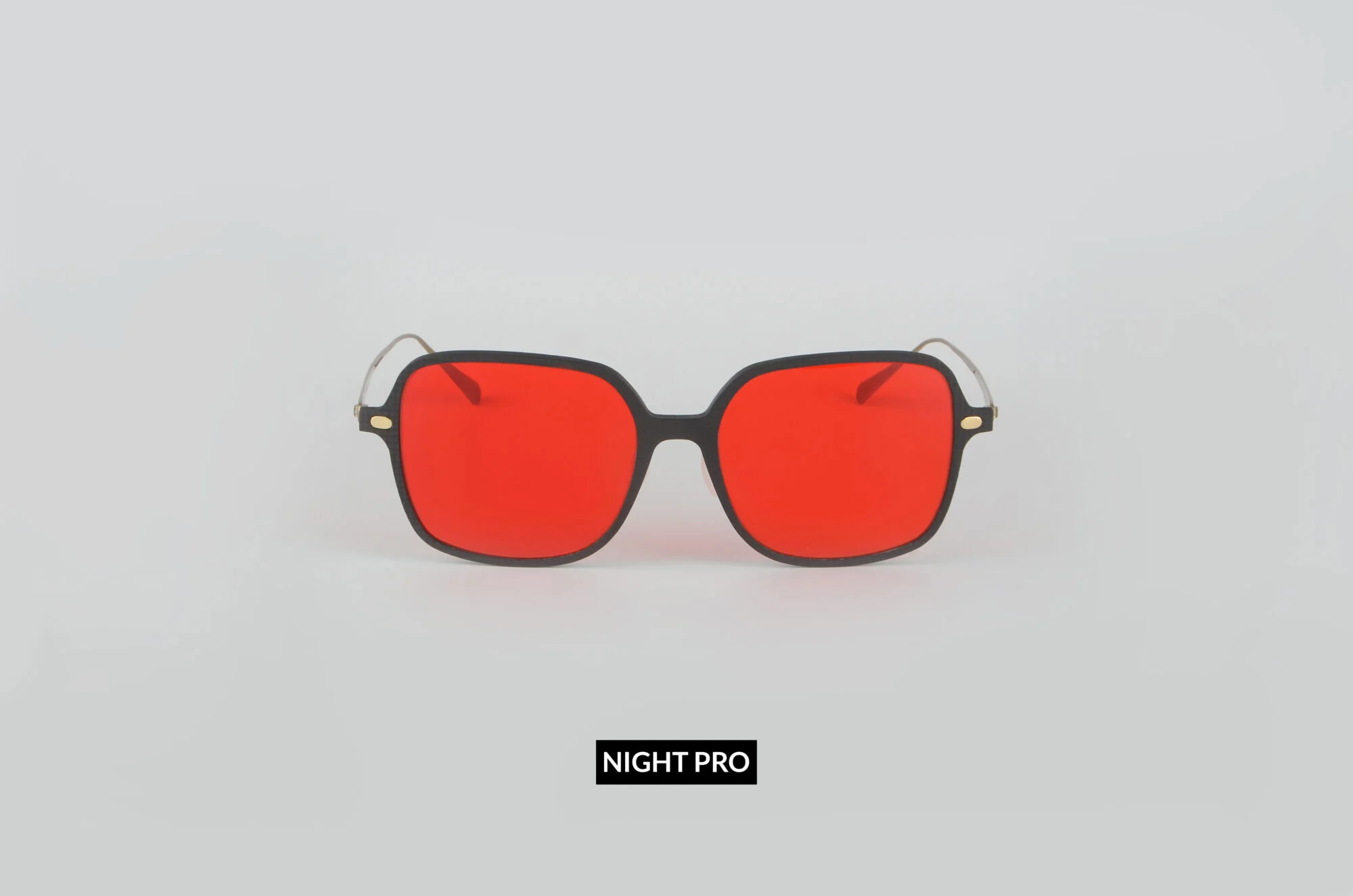
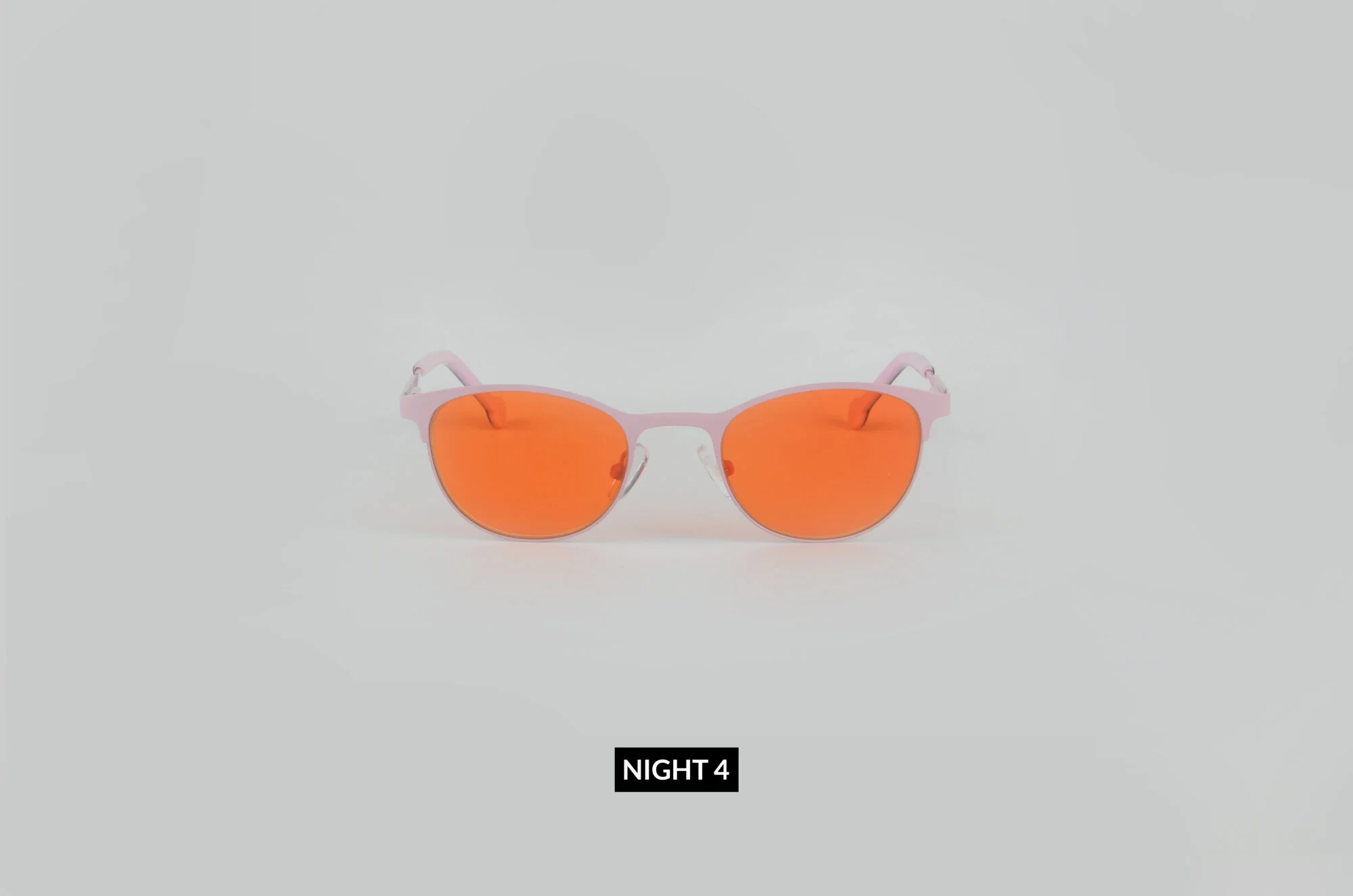
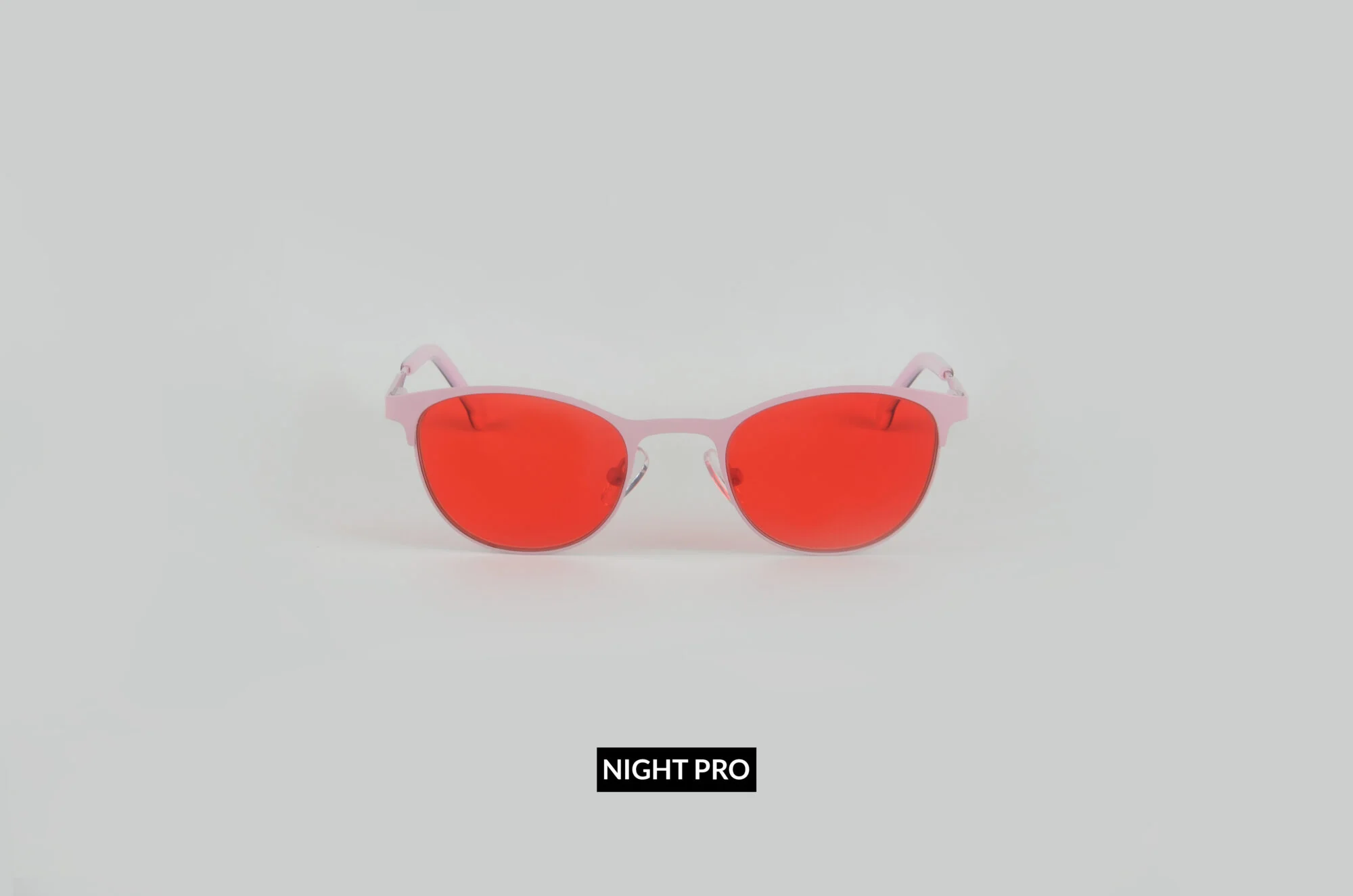
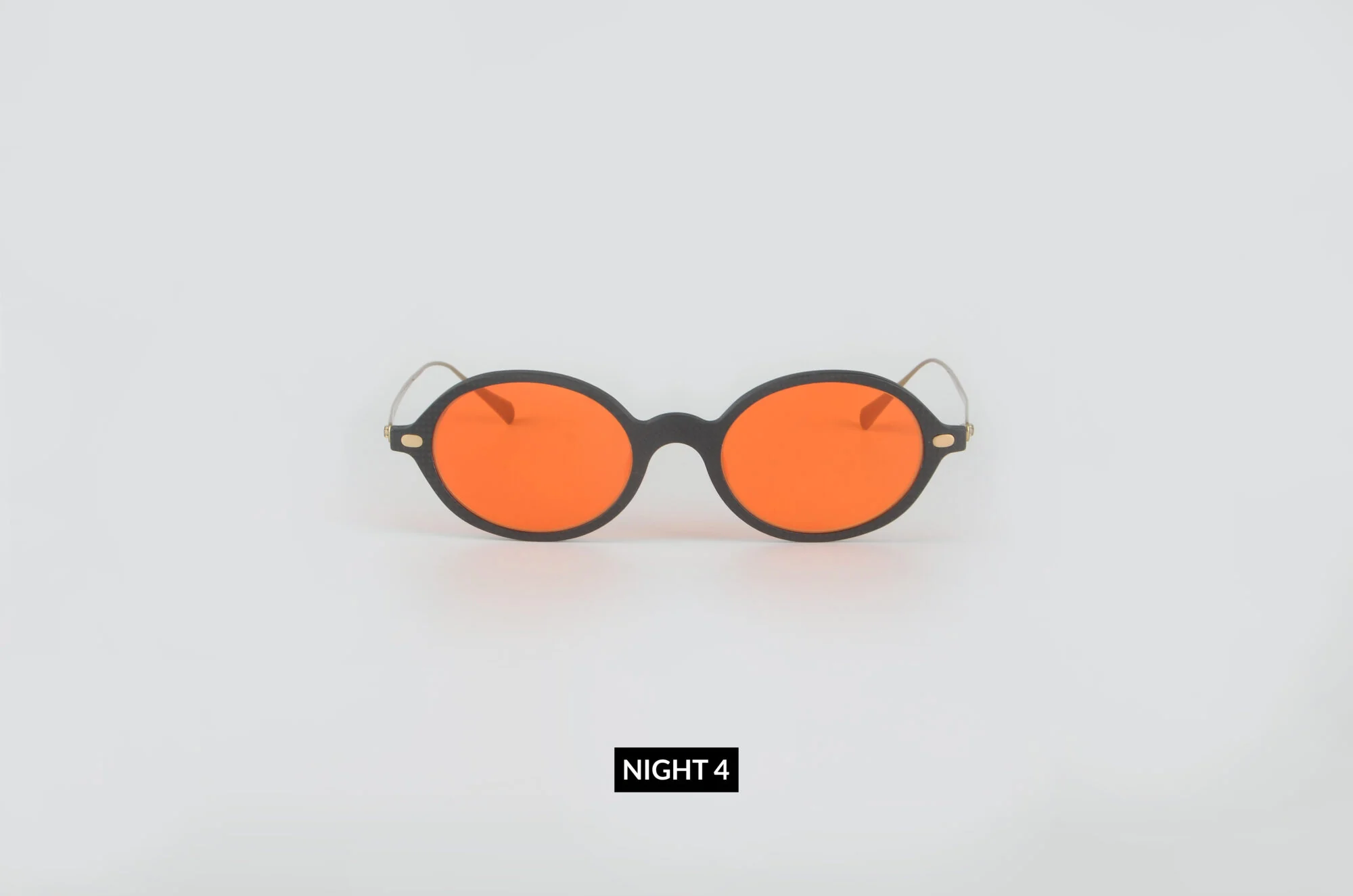
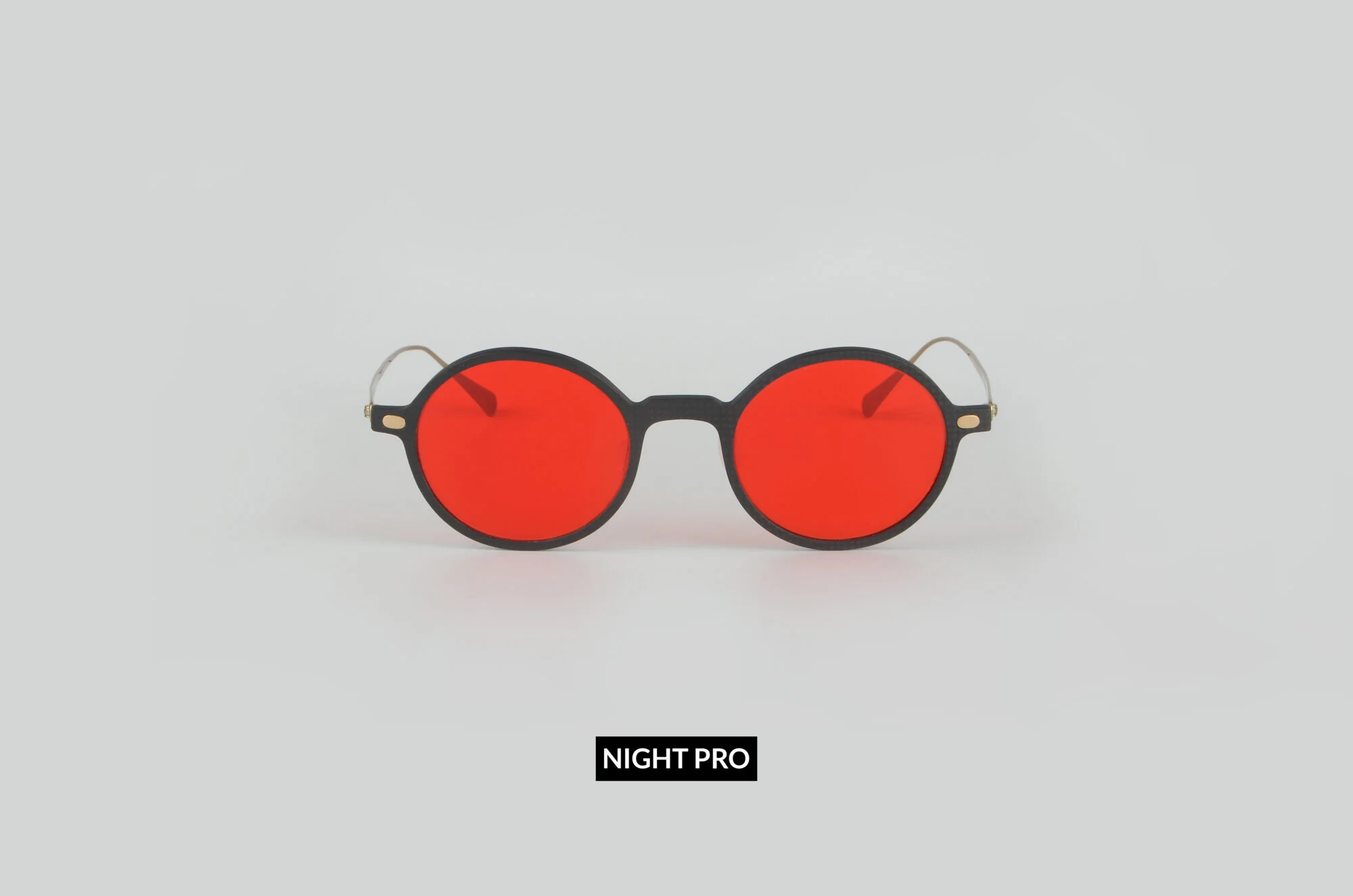
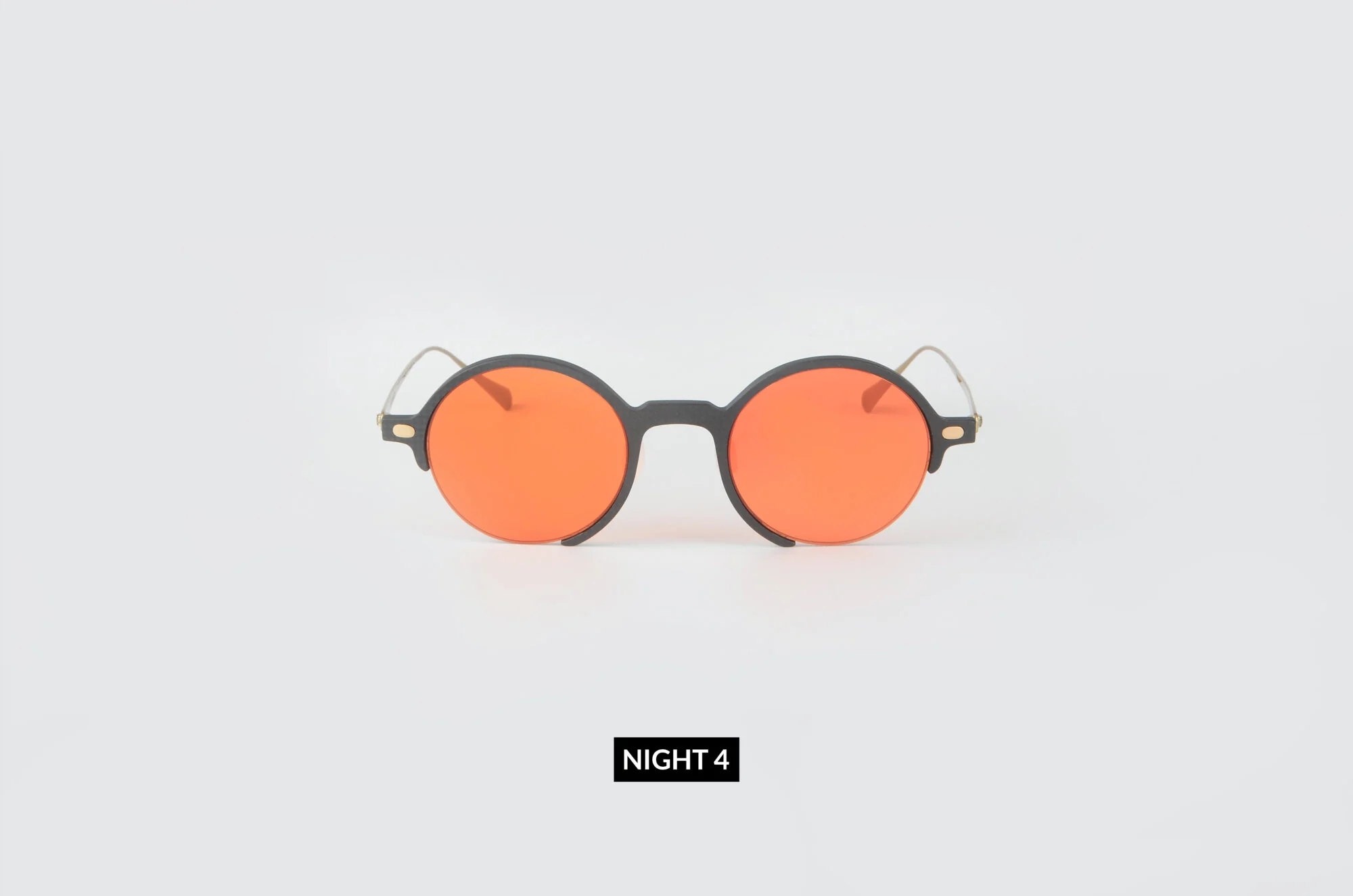
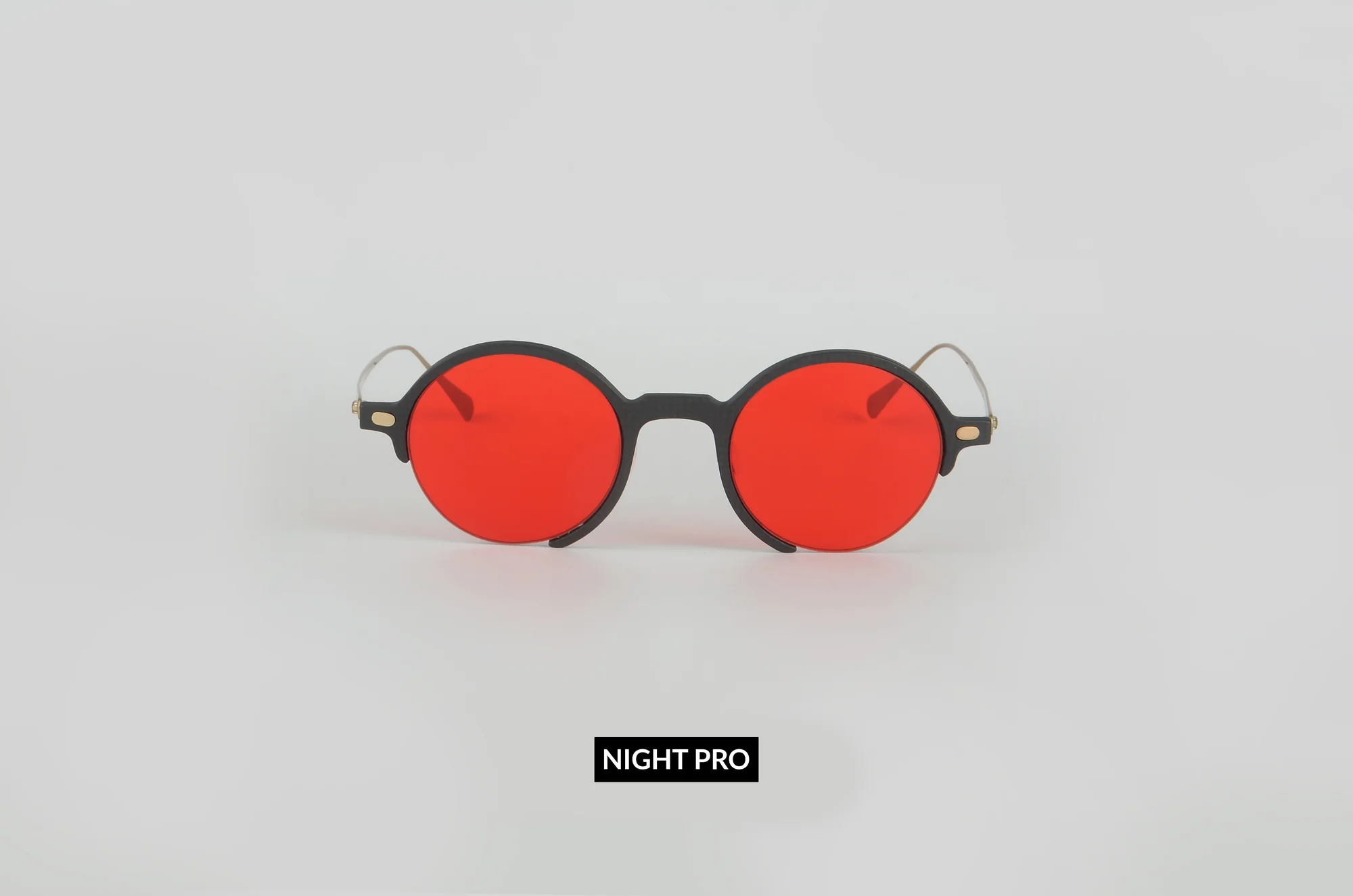
Do you recommend NIGHT 4 or NIGHT PRO to start with?
The details of the lenses are written intelligently on our site. We recommend the guided selection that will suit you, but here is Loïs's word:
You are never wrong to have a NIGHT 4.
If you want to take no risk at all, take the latter, which will always be good to wear during your night-time periods, and easy to adopt.
But if you consider your way of life far too out of step with Nature, if you have an entrepreneurial project you work on at 11 pm, if you are in the metro at that time, wear NIGHT PRO. If you have sleep problems, or a real addiction to "doom scrolling" in bed at bedtime, take NIGHT PRO.
The two are complementary: NIGHT 4 generally, NIGHT PRO in strongly artificial cases.
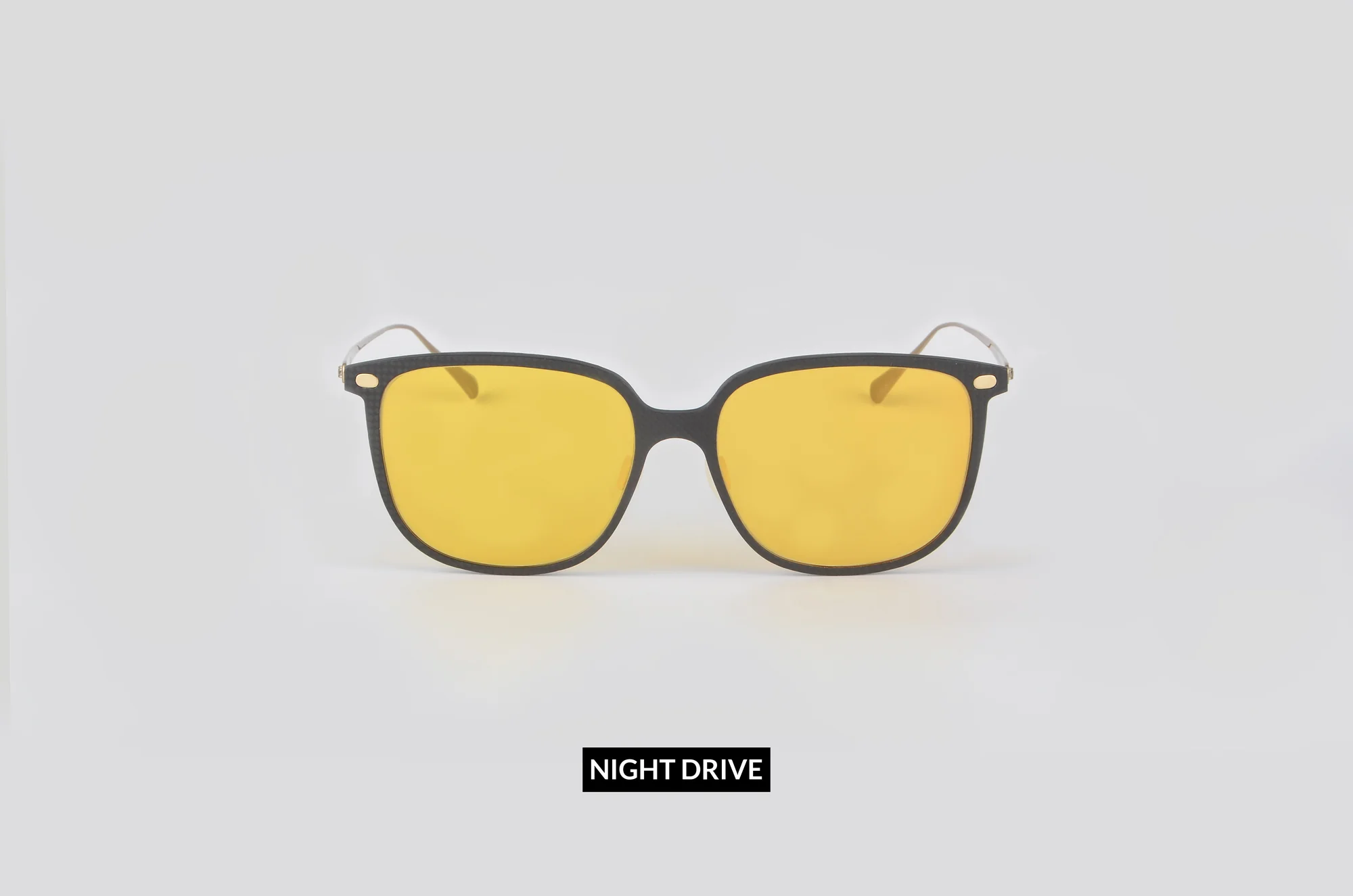
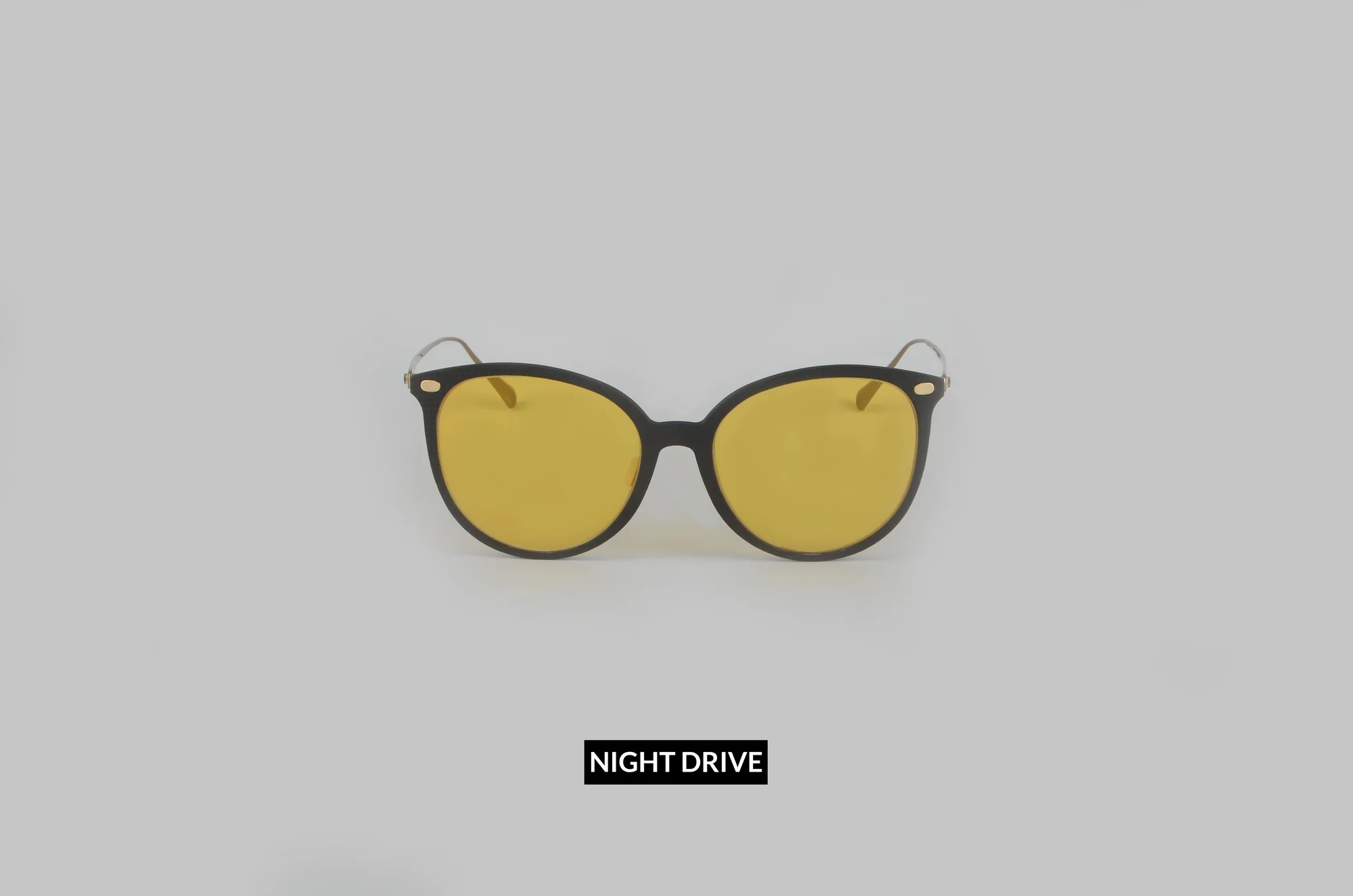
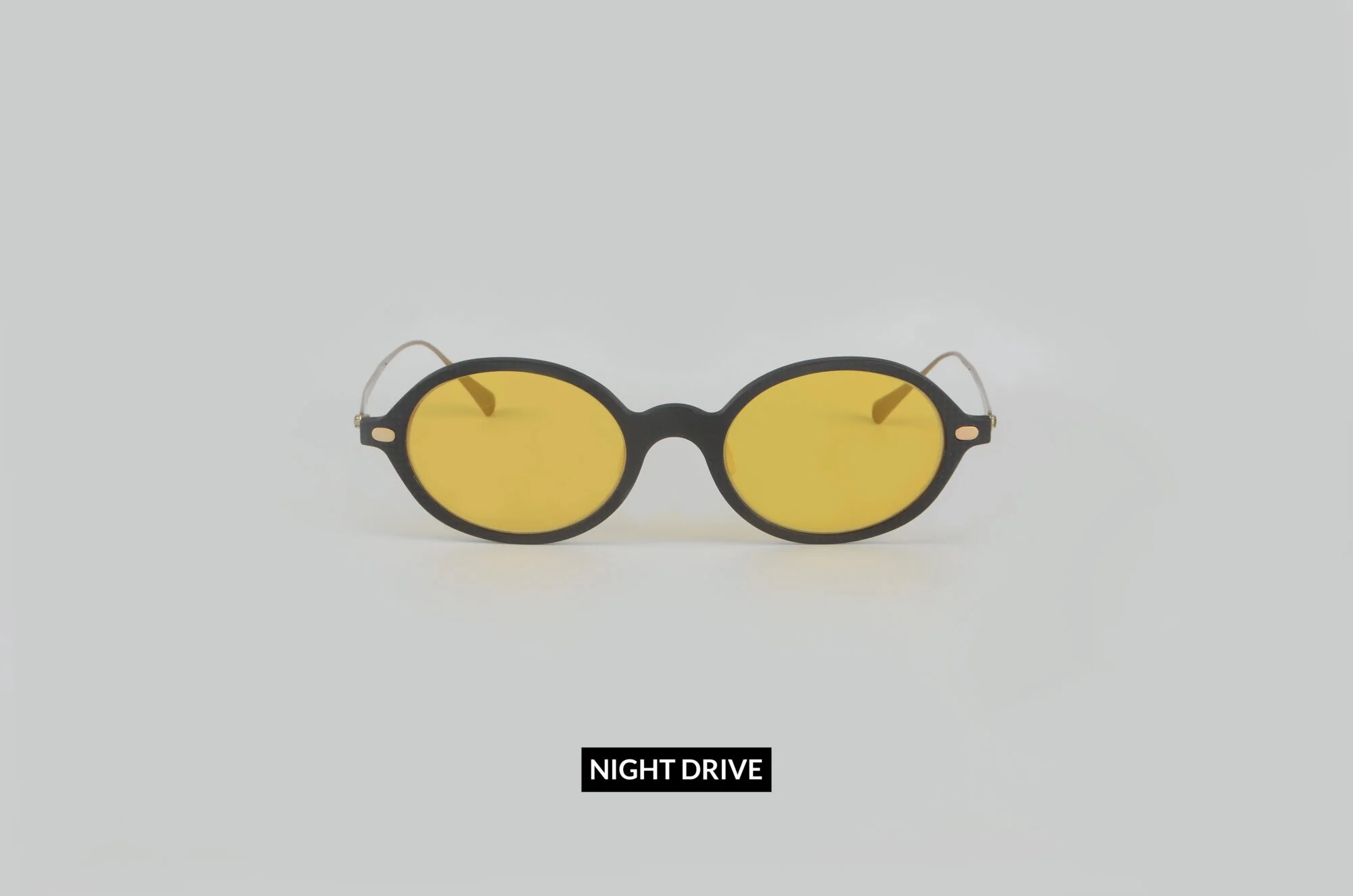
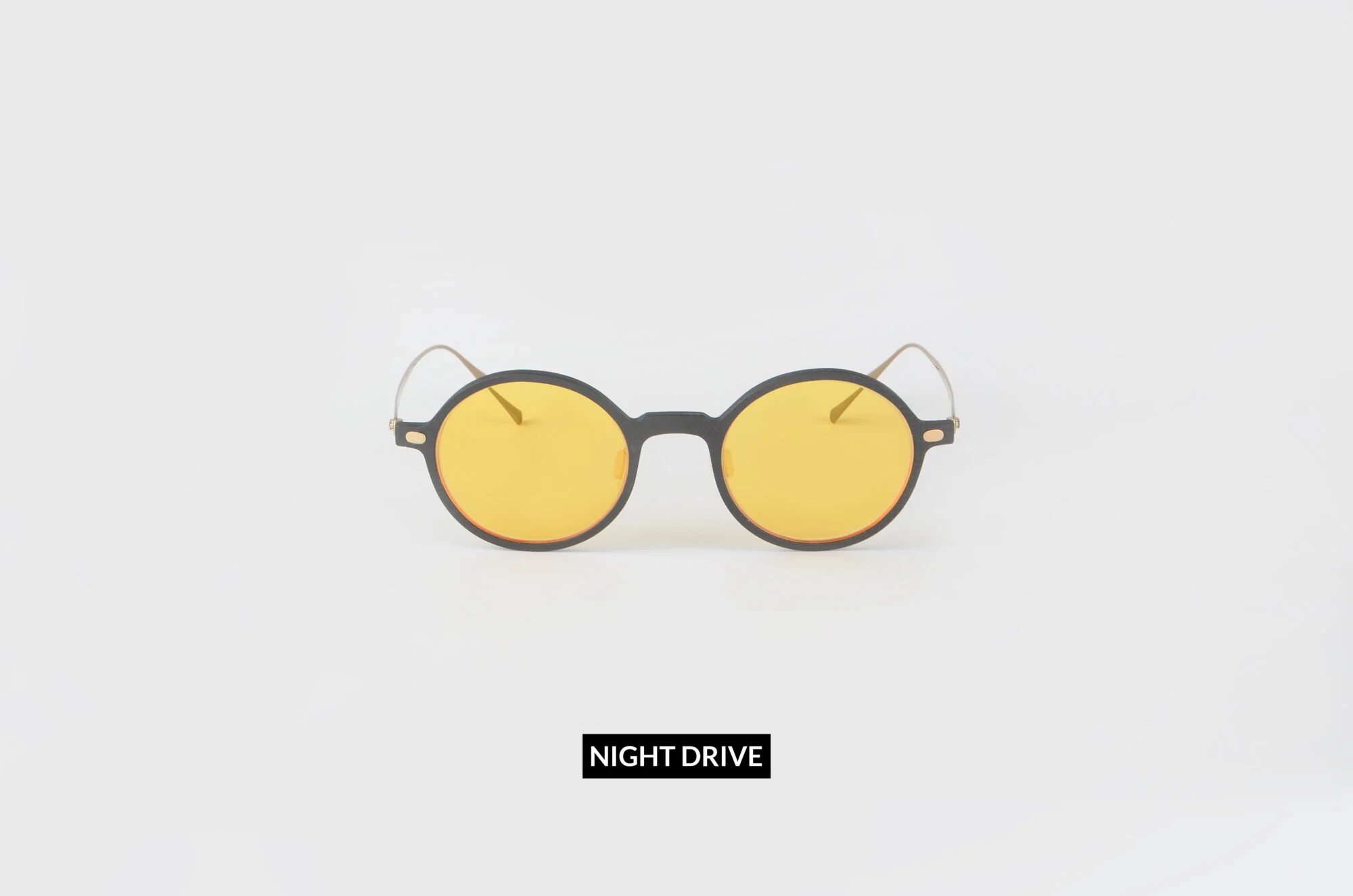
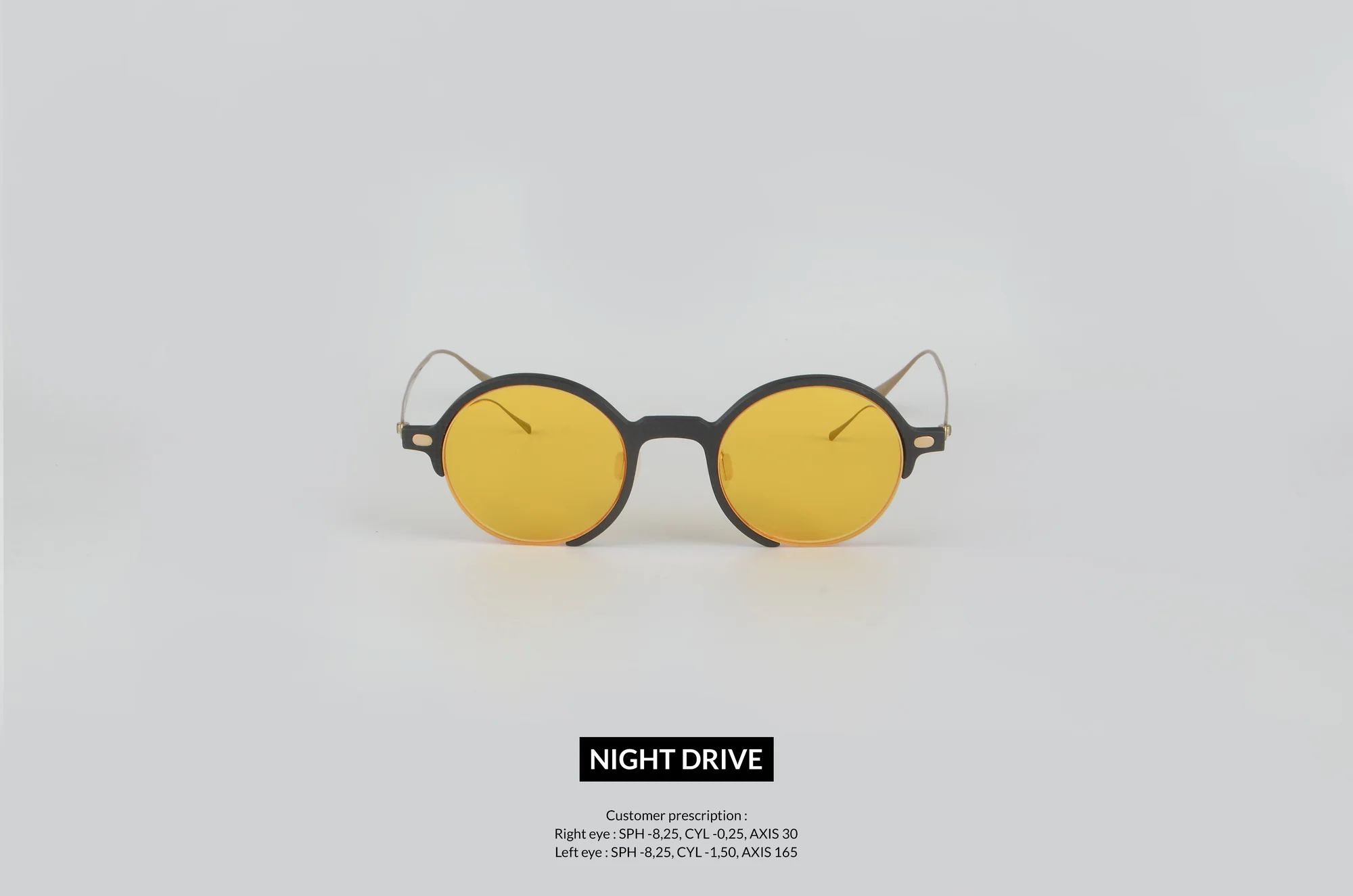
If you want to stay alert (night driving, night work with responsibilities, night-time revision if you are a student), NIGHT DRIVE will suit your needs.
How can I be sure the frames will fit me?
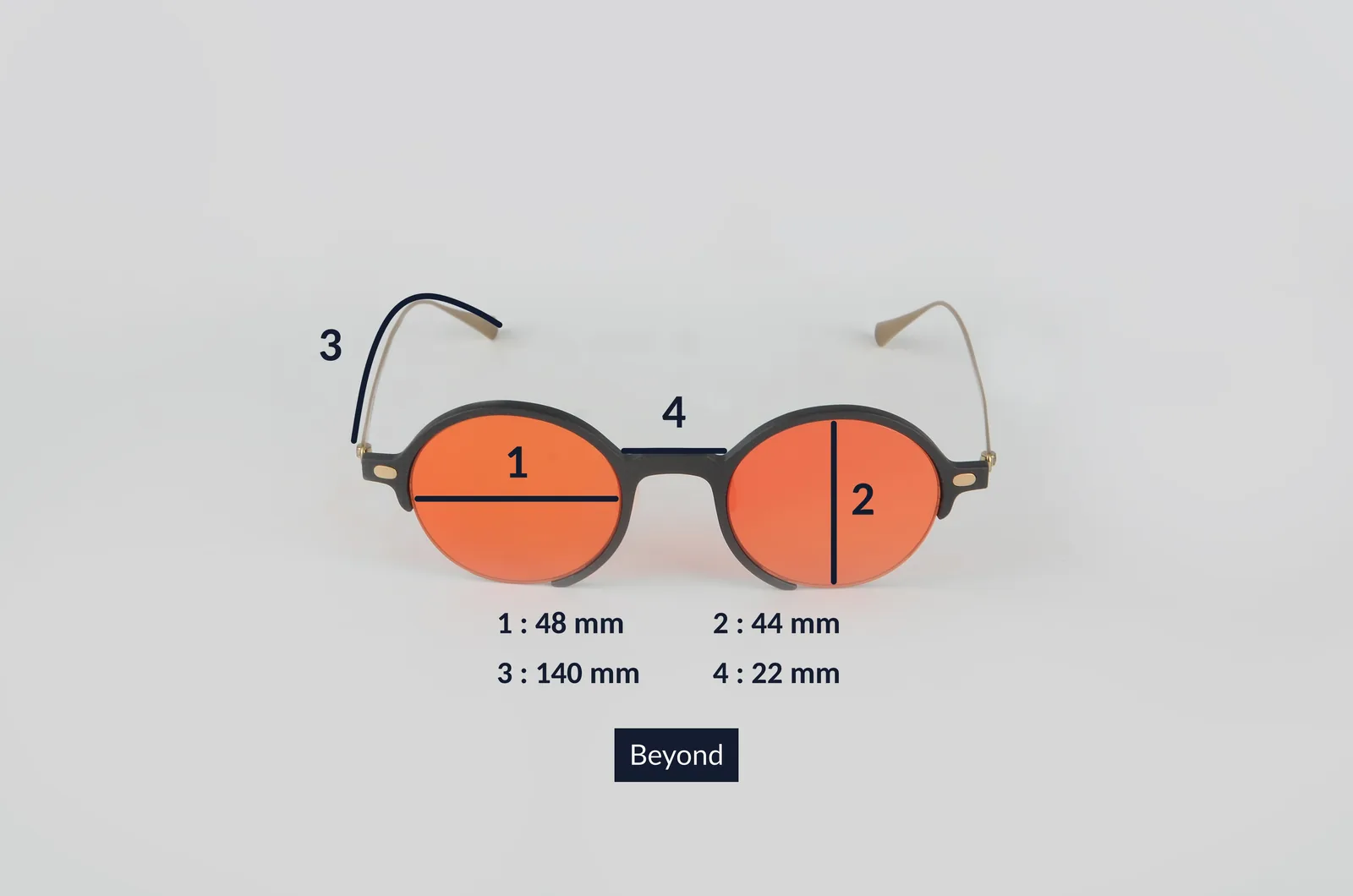
All our glasses are designed to be light, comfortable and to fit your head naturally, without needing any outside intervention.
We estimate that 95 to 98% of our customers can wear our frames without any particular adjustment.
However, no two head shapes are exactly the same.
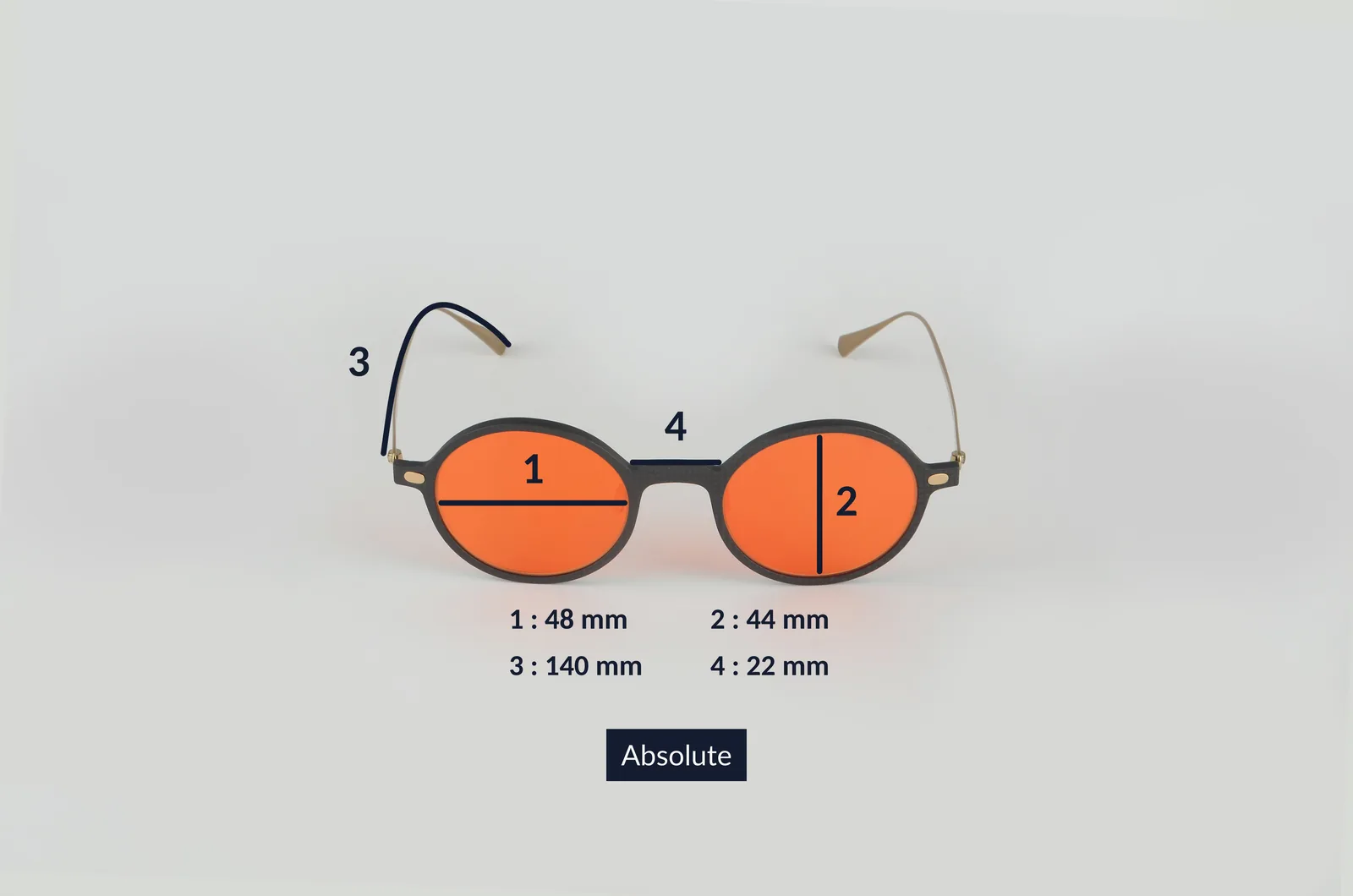
If you have an exceptionally wide or small head, we invite you to contact us before ordering, especially if you have already had difficulties with the size of your glasses at an optician's.
Our most generous adult models:
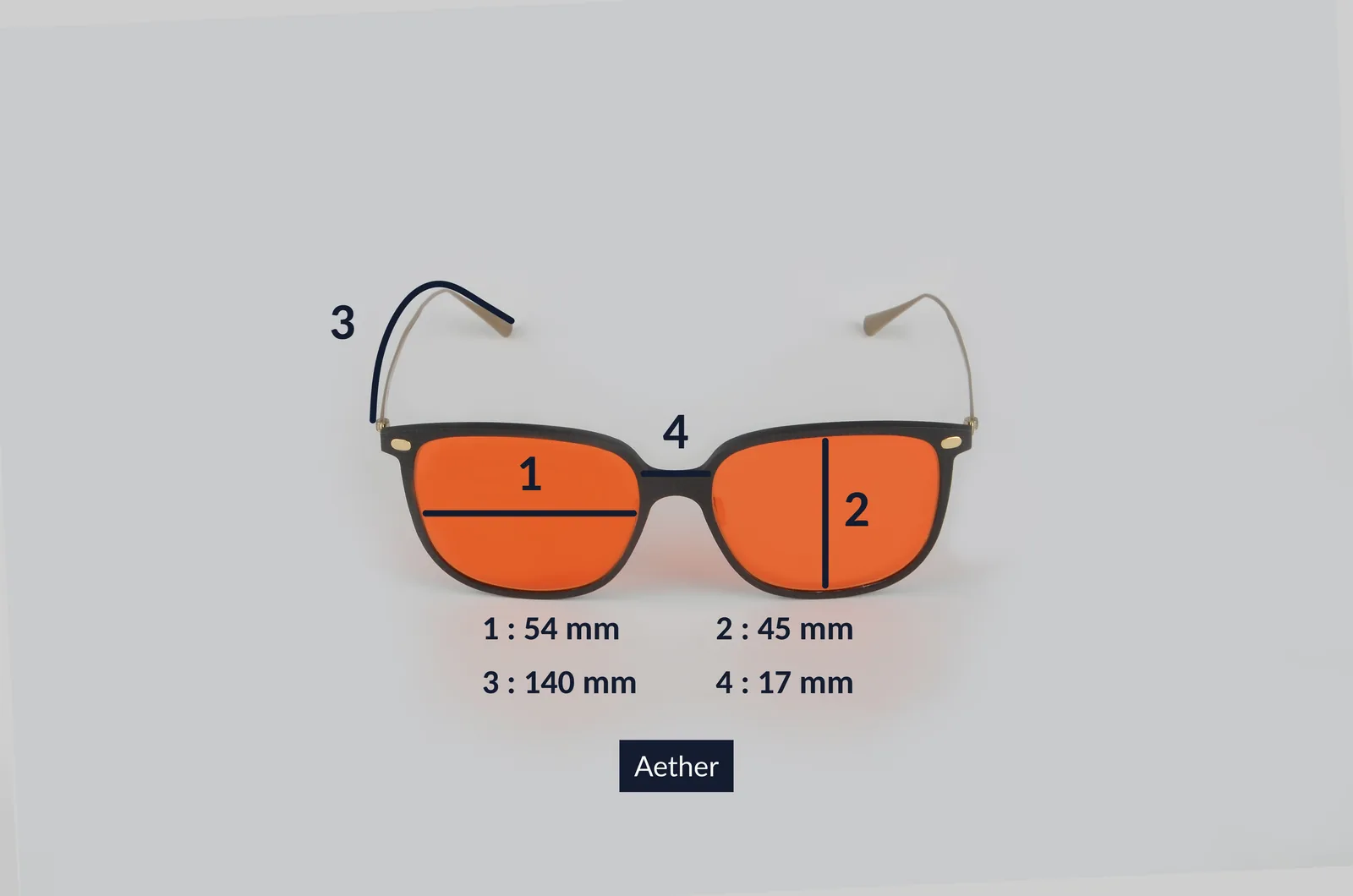
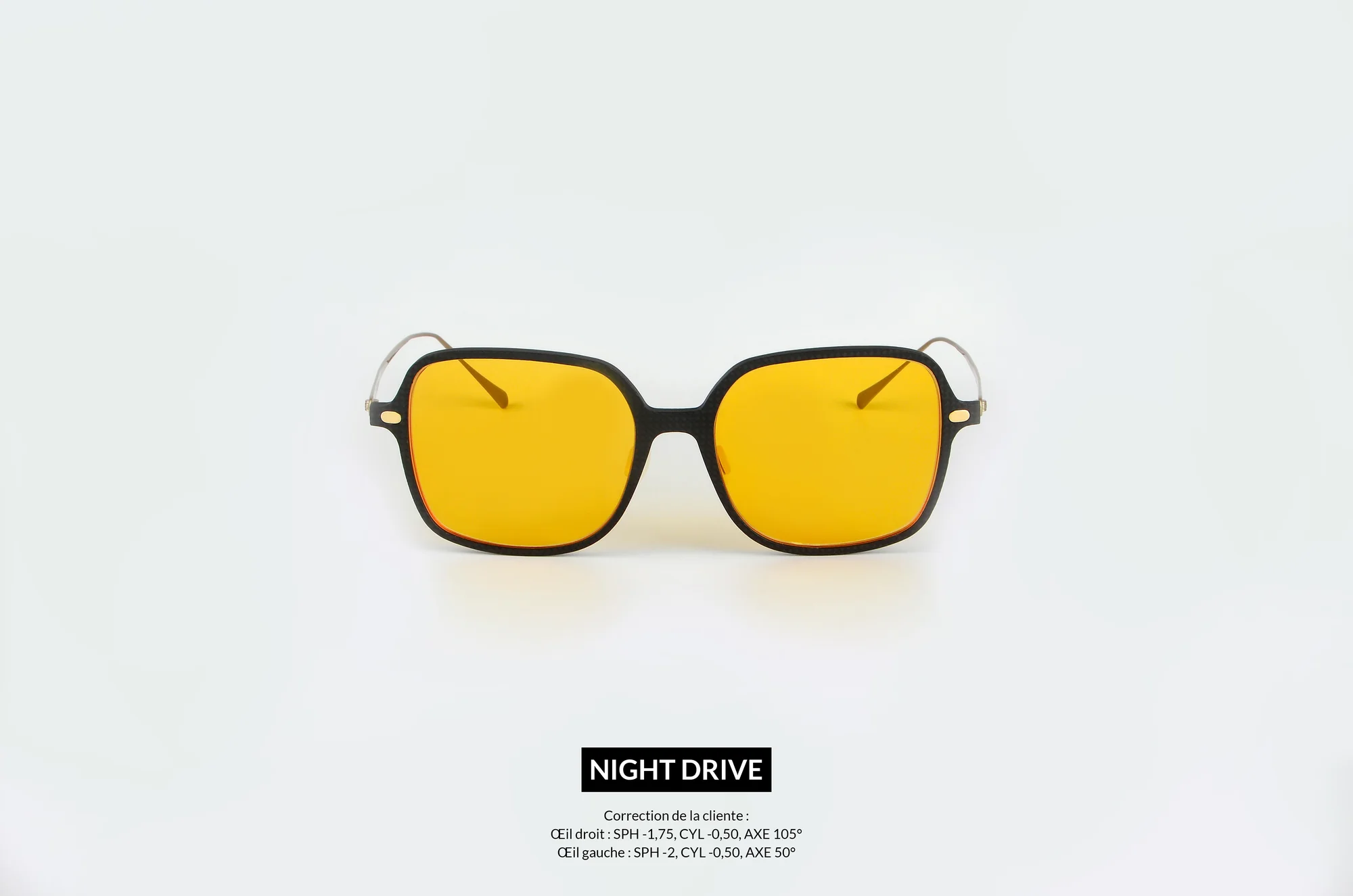
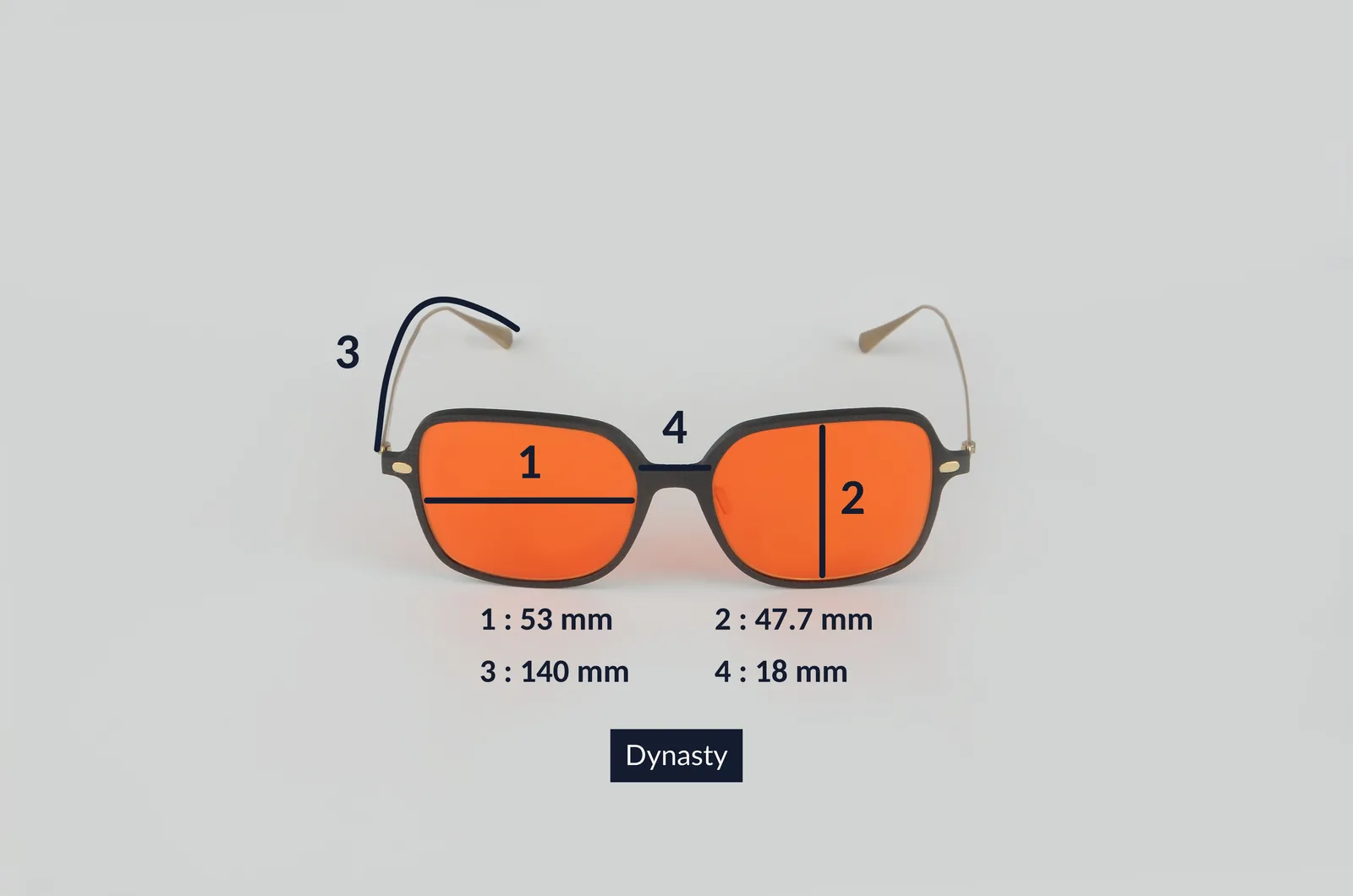
For particularly narrow faces, used to teenage or children's sizes, we recommend three models: 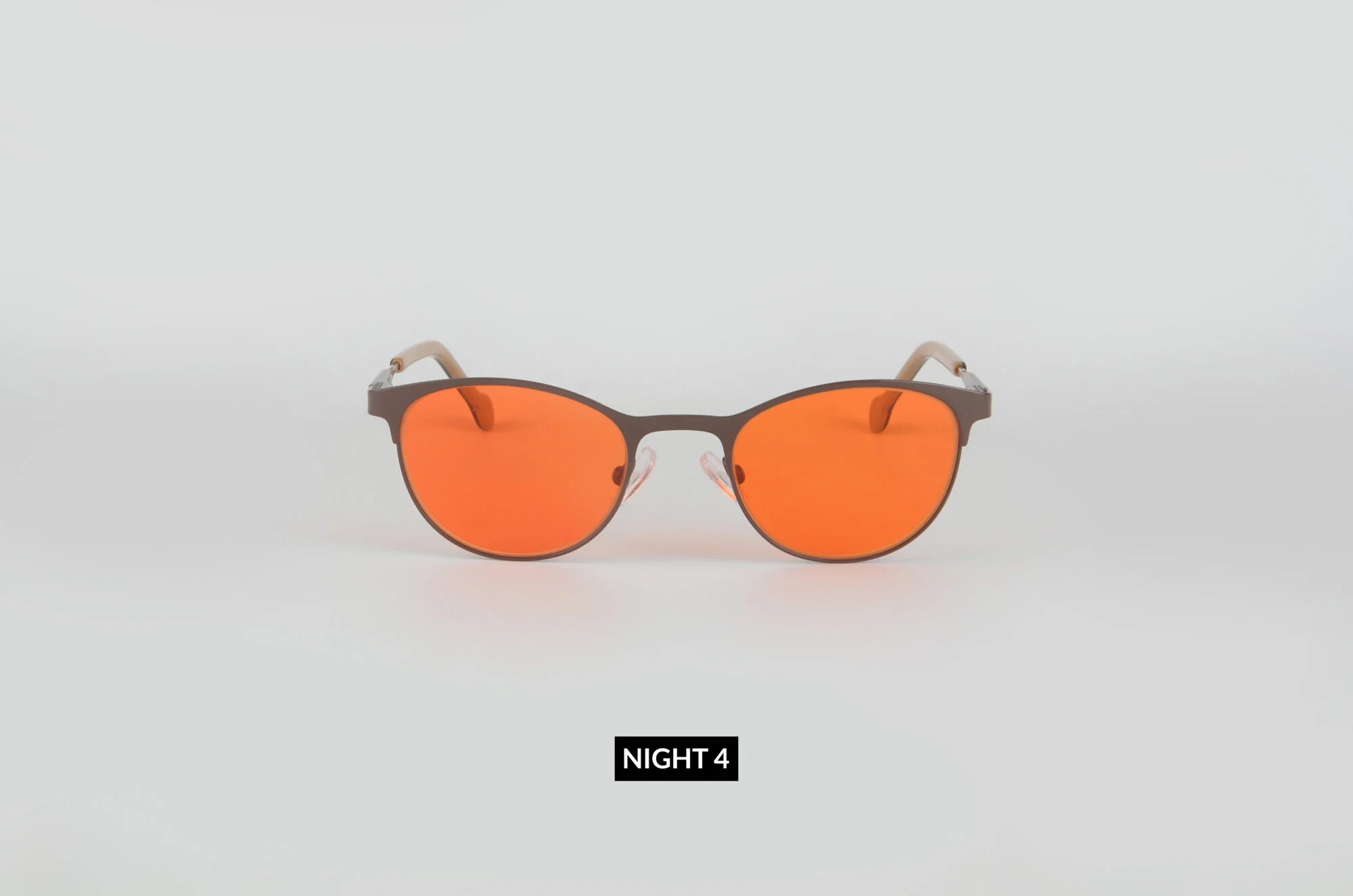
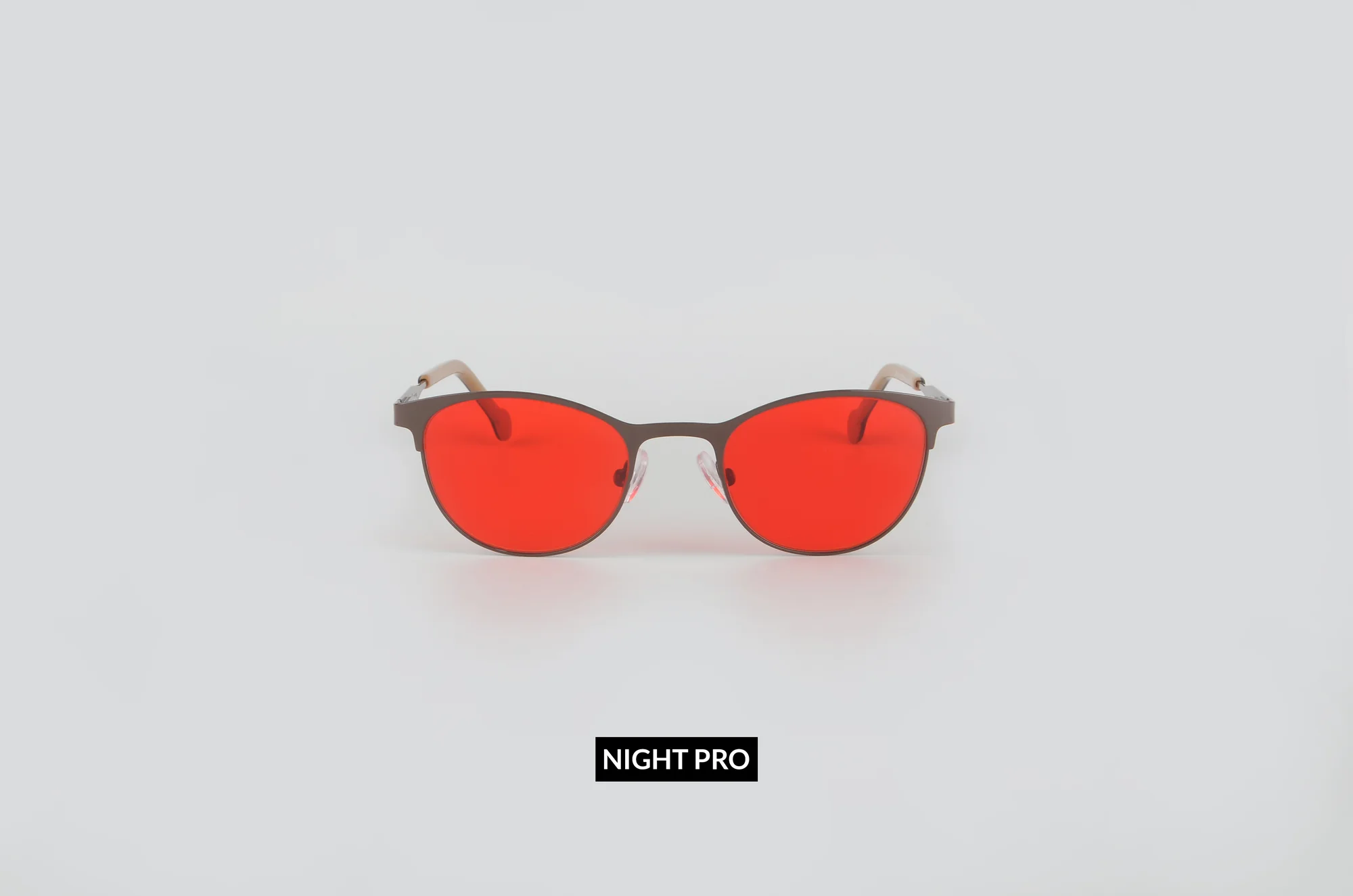
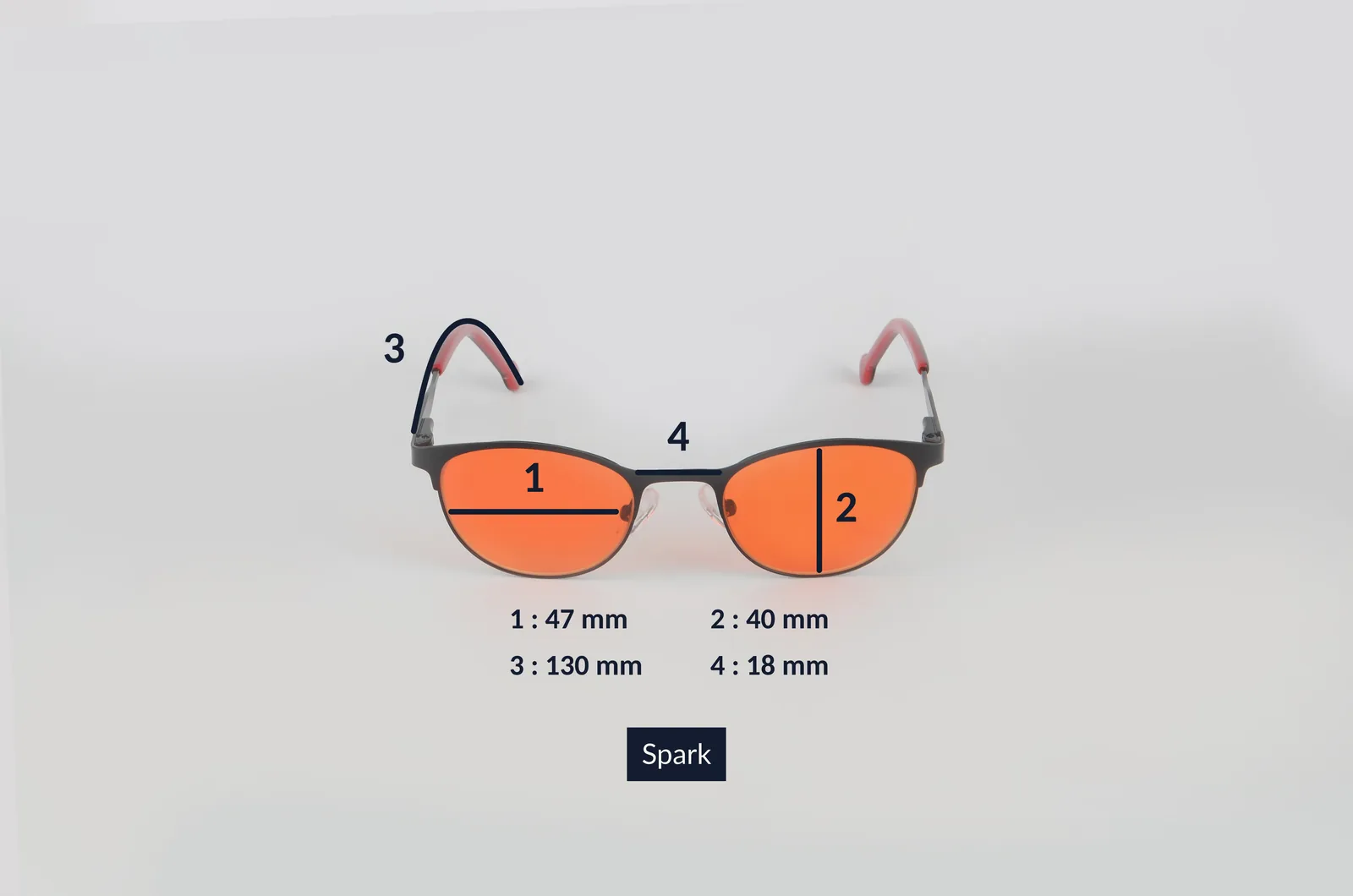 and
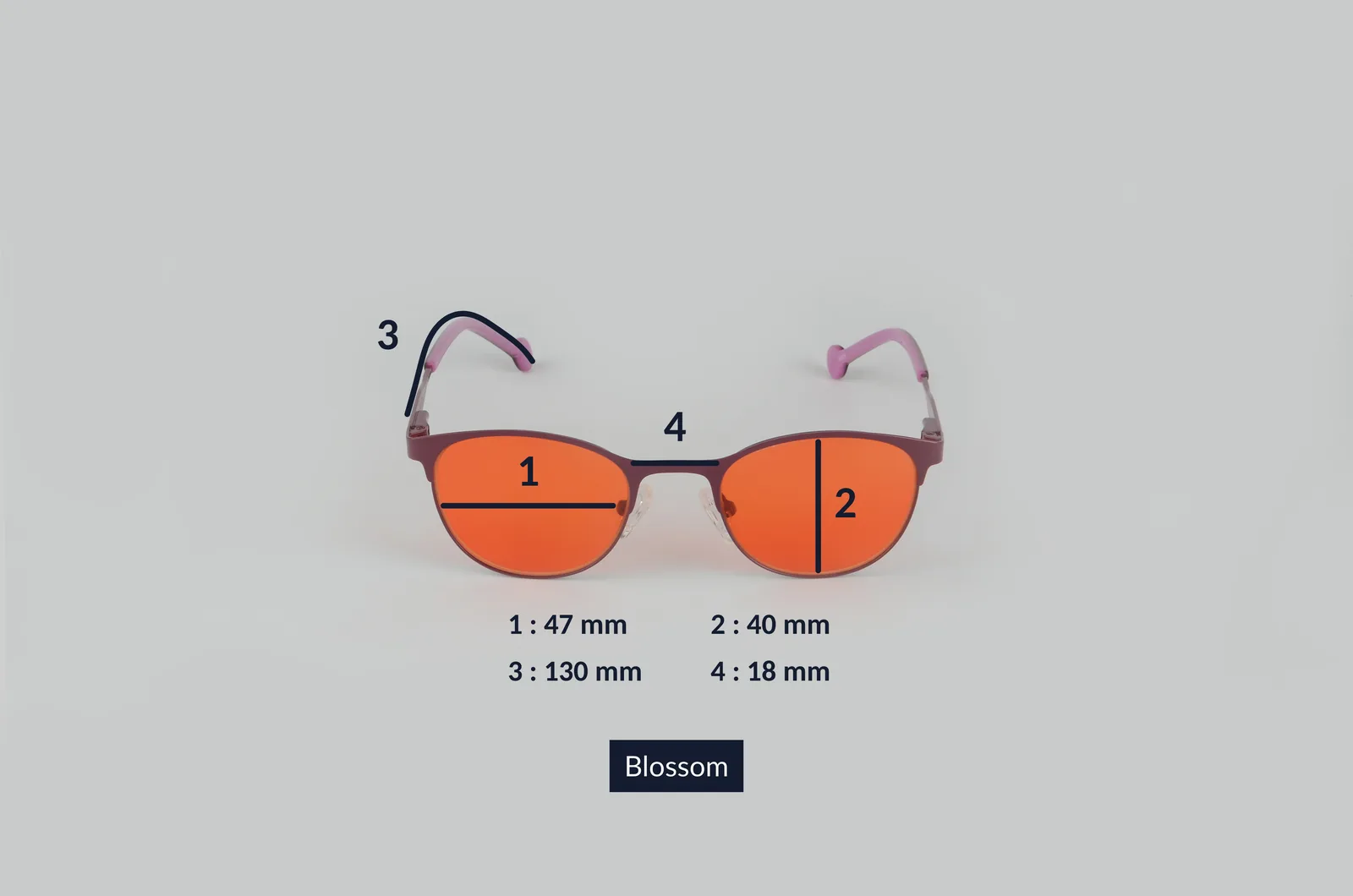 for the smallest, and
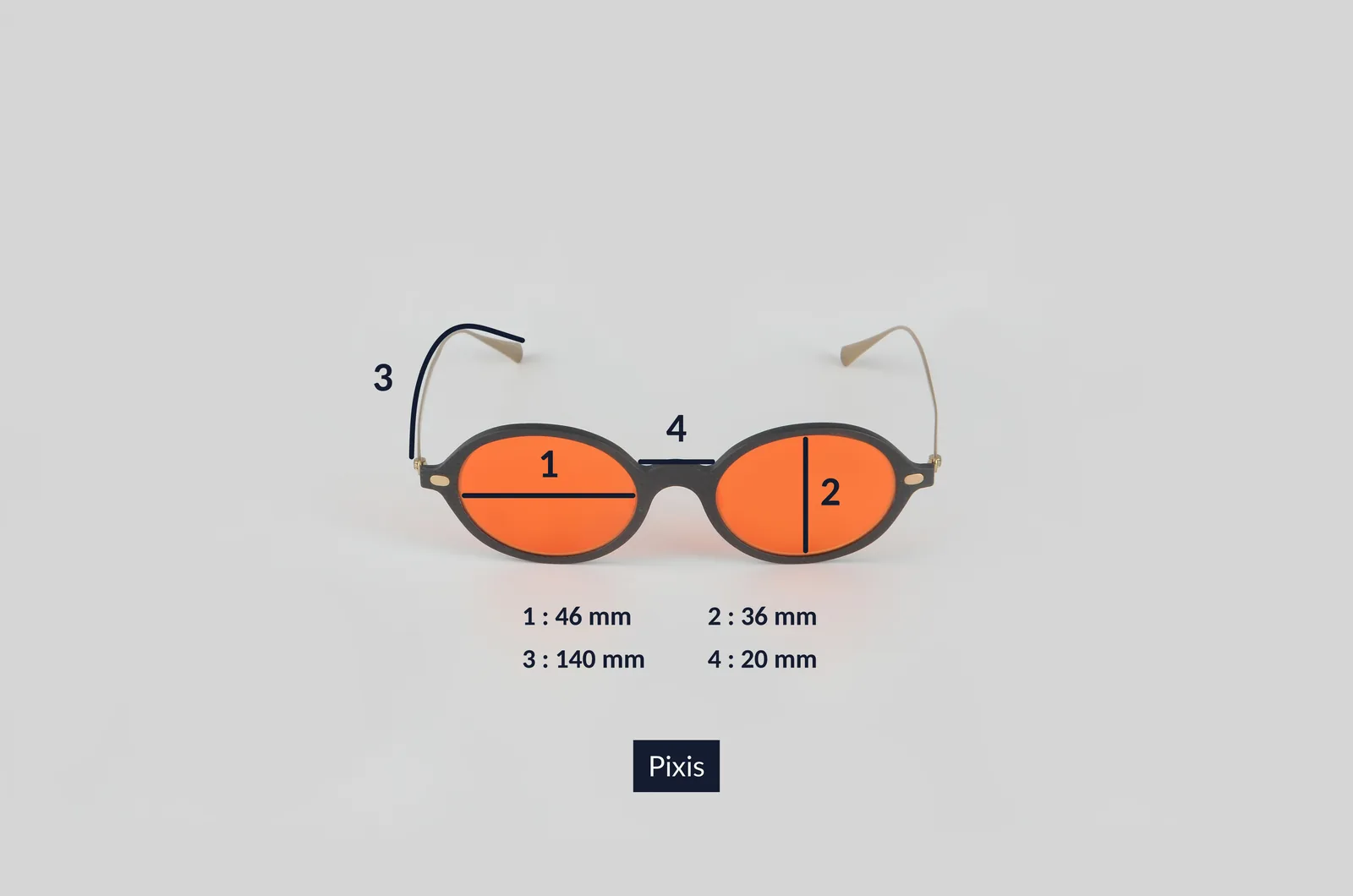 for a model slightly larger than our children's collection.
is perfect for pre-teens.
From adolescence, we recommend our small adult models: 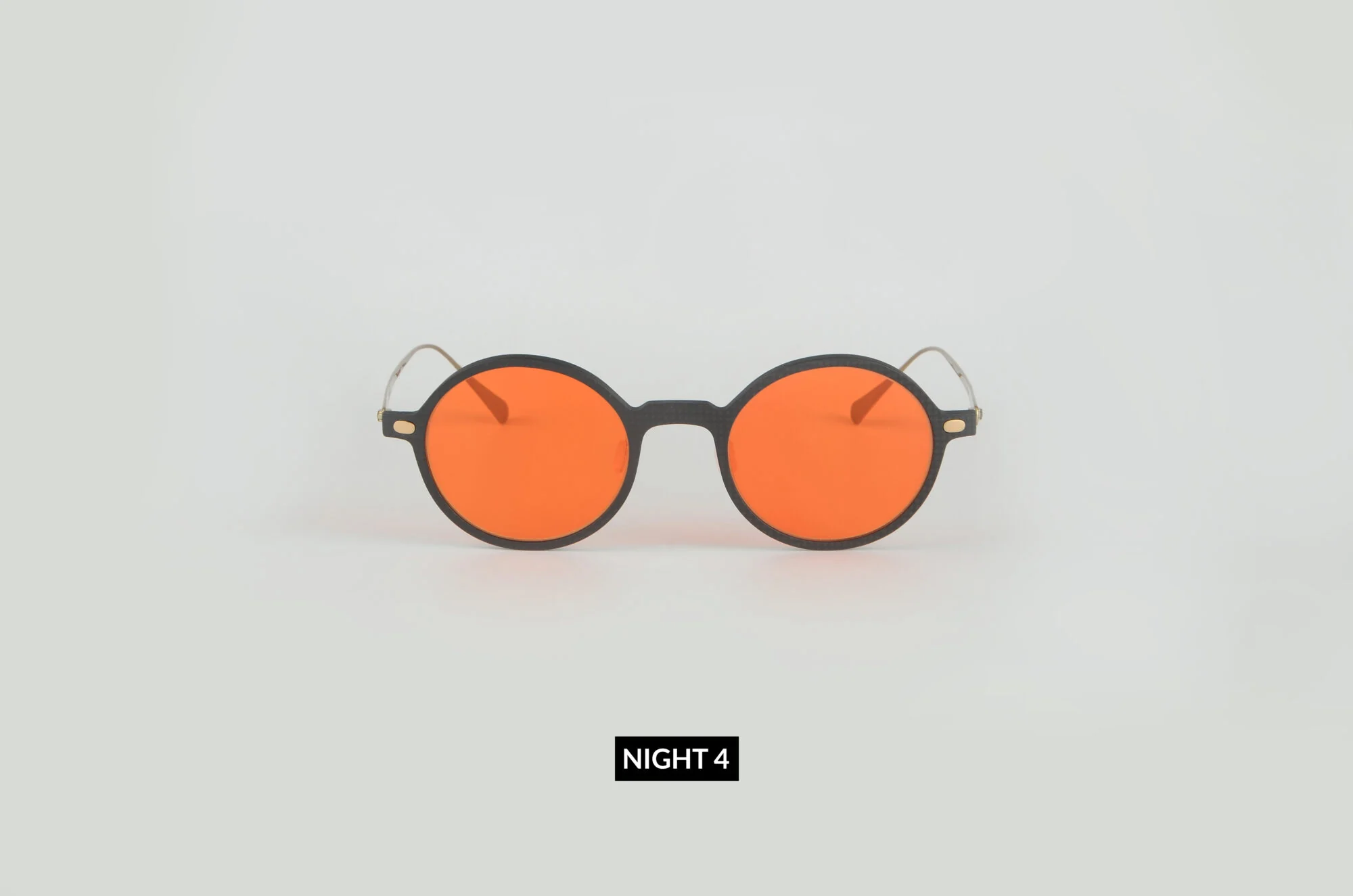
 ,
 , for example.
To help us guide you towards the frame best suited to your face, you can contact us. Our team, which includes opticians, will advise you within 24 hours, often sooner, to help you choose your frame with complete peace of mind.
Your satisfaction is our commitment. If, despite these precautions, your frame did not suit you, your Taste Guarantee gives you 60 days after your order ships to return it at the Maison's expense, for an exchange or a refund. We invite you to read the detailed terms in our Care Charter.
Why does Loïs Kedochim not favour “clips”?
Because we love lightness, comfort and optical quality, without compromise.
Clips add weight to the frame, can come loose or fall off, and often spoil the natural elegance of the glasses. Magnetic systems also require magnets near the temples, a choice we prefer to avoid because of our undeniable electromagnetic nature.
Also, a clip lays a second pair of lenses over the original lenses, multiplying the surfaces likely to produce reflections and reduce visual quality.
We prefer a true optical lens, built directly into a frame designed for it.
What is the optical performance of the DAY lens?
- Our DAY Organic lens is made of resin. It is therefore light, but has a low transmittance of natural light (it blocks 100% of ultraviolet, and blocks most of the infrared). We sell it all the same because it is of exceptional optical and material quality, and because it meets the highest corrections and the tightest budgets.
- DAY Mineral lens: it transmits far more ultraviolet than the other players on the market; it transmits more visible light - all the more if an anti-reflective treatment is applied to it: 97.5% transmittance; it transmits more infrared.
Yes, these DAY lenses also let artificial light through.
But because during the day, the solution is not to put a bandage in front of your eyes, but to get out of the toxic environment: be outside, moving.
Can I send my prescription manually, without an eye-test result?
Yes, where the applicable regulations allow it. You then commit to the accuracy of the information you send, for which you take responsibility.
As our prescription lenses are made individually to your prescription, any error or omission on your part cannot be covered free of charge under our 60-day Taste Guarantee.
We accept no deliberate change to a prescribed correction, in particular lowering it to obtain cheaper lenses.
To benefit from our Taste Guarantee on your prescription lenses, we require a compliant prescription less than one year old. Otherwise, this commercial guarantee will not apply to the lenses concerned.
A recent prescription (less than one year old) or an eye test carried out by a qualified optical professional is a condition of access to the Taste Guarantee.
These conditions do not affect your legal guarantees.
Are the glasses reimbursed by French mutuelles (supplementary health insurance)?
In France, our glasses are not eligible for reimbursement by French mutuelles.
In Switzerland, cover may be possible:
- For adults: by some supplementary insurers, depending on the terms of your contract.
- For under-18s: by basic insurance (LAMal), for prescription lenses, within the limits and conditions provided.
Our prescription glasses are medical devices intended to correct vision.
On simple request, we issue a detailed professional invoice, stating in particular the nature of the device, the optical correction and the prices, to make your claims with your insurer easier.
This option applies to our customers worldwide, subject to the reimbursement rules of each country and each insurer, except French mutuelles.
To get your invoice, simply contact us.
Could the temples of Loïs Kedochim glasses hurt my ears or head if I wear headphones?
No.
Our glasses are all light and comfortable, and are developed expressly to fit your head without needing outside intervention.
To understand the comfort we offer our customers, we invite you to read our guestbook, and go to the section “CONFORT, LÉGÈRETÉ ET TENUE” (comfort, lightness and fit).
How do I take care of my Loïs Kedochim glasses?
Remember this: beautiful glasses are always clean.
They deserve a few simple daily gestures.
To keep your lenses clear, we recommend using a cleaning spray specially designed for glasses, together with the cleaning cloth offered by the Maison.
Spray a small amount of product, then gently wipe the lenses. Always make sure the cloth and your fingers are clean: abrasive dust could scratch their surface.
Without a spray, rinse with lukewarm water, never hot, with a drop of mild soap, without harsh agents. Rinse carefully before drying with your clean cloth.
Our frames are made to last. Titanium, carbon fibre, worked glass fibre and our wood species were selected for their mechanical qualities, their lightness and their character. These noble materials nevertheless need regular attention, particularly when they are exposed to perspiration and the skin's natural oils.
Our care ritual:
- Every day: clean your lenses to keep a perfectly clear view.
- Two to three times a month: take a few moments to clean the whole frame, gently insisting on the areas in contact with the skin.
- After each use: put your glasses away in their leather case, made to accompany and protect them every day.
A few essential precautions
Avoid hair dryers and any source of intense heat, solvents, alcohol and acidic products. Do not leave your glasses needlessly exposed to excessive sun heat or prolonged humidity.
Finally, never clean your lenses with a dirty garment or cloth. Your cleaning cloth is offered to you precisely for that.
Personally, when I enter a phase of my life where I wear my glasses during the day, I clean my lenses several times a day. It is an almost instinctive gesture: finding the sharpness of details again, observing with precision… taking care of the way you look at the world is a gift.
Are the lenses scratch-resistant?
Yes, they are scratch-resistant, lightweight, stylish and durable.
But they are not indestructible.
To protect your lenses, we advise you to store them in your case when you are not using them, or to place the closed frames on a flat surface with the lenses facing up.
To go further, the Maison offers lenses from a higher range, made of a more premium material, offering in particular better resistance.
Without visual correction, we recommend the Excellence lens.
With visual correction, we recommend the Excellence Thin lens, thinner and particularly suited to everyday comfort.
For high corrections, the Excellence Super Thin lens becomes necessary.
My children are over 11, which frame should I choose?
Even though it is also a question of physical and psychological maturity, and despite individual variations, we advise you to choose an adult frame from 11 years old, or even from 10 for some children who are already pre-teens.
How do I adjust my Loïs Kedochim glasses?
Loïs Kedochim glasses are equipped with adjustable hinges and should fit your face comfortably.
The temples of the adult frames are made of compressed titanium: you can adjust them as you wish; they won't break. You can adjust the curvature, particularly at the ears, for even greater stability.
You can also gently adjust the curvature of the nose-pad arms (where the glasses rest on your nose). This part is more fragile than the temples, so don't press too hard on it.
If you ordered a pair from our children's collections, we are confident that the frame will sit comfortably on your little ones' nose and ears.
If you still wish to take your frames to your local optician for adjustment, that's possible; and you can do so in Paris at our partner opticians (for example at Jérémy Goelzer, 46 rue de Longchamp - Optique Longchamp) and also in Lausanne (Rue de Genève 6, Binocles).
Frames damaged by third parties can be neither refunded nor exchanged unless you hold a Membership or La Collection membership, which provide for it.
A question about the usefulness of Loïs Kedochim glasses.
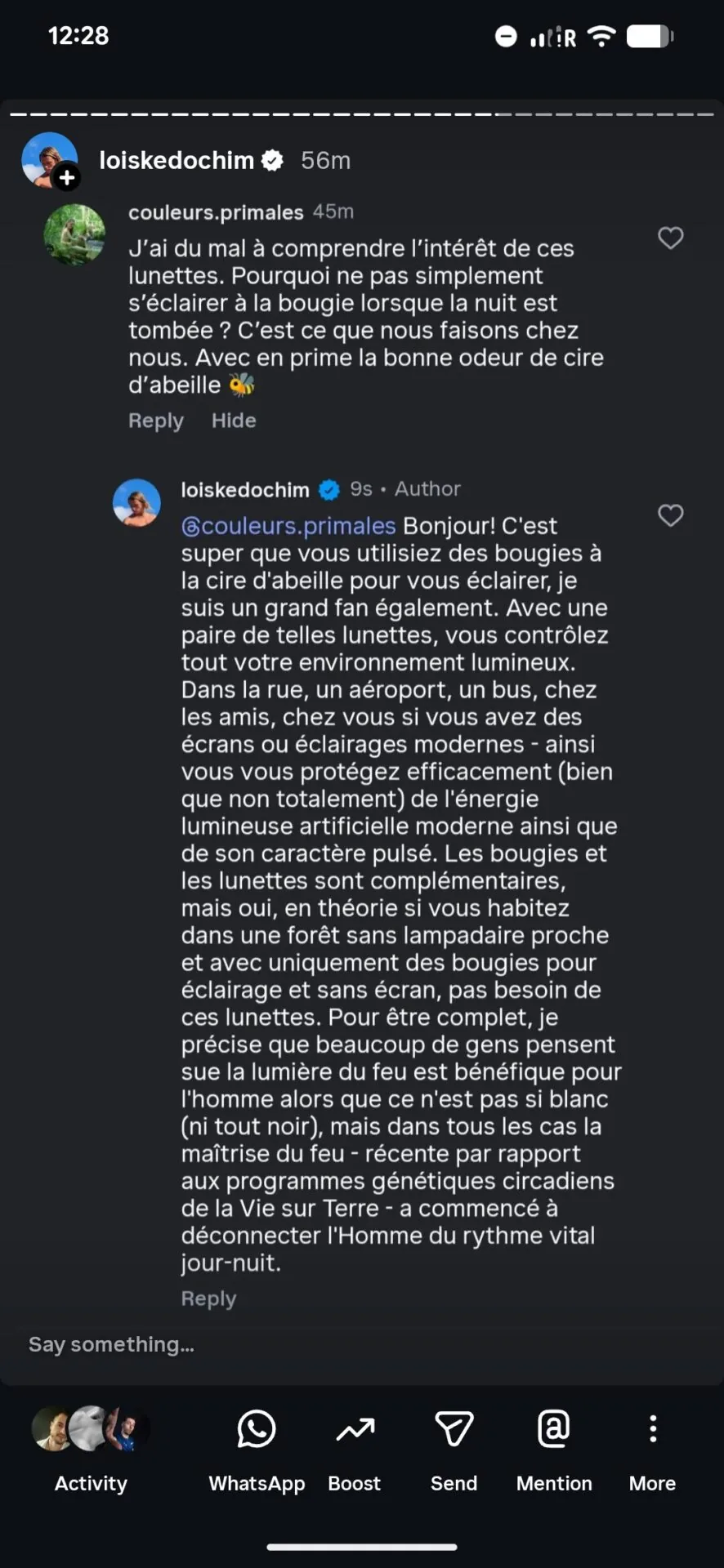
Is switching my screens to red enough?
No. It does not reduce the pulsed nature of the light emitted by the screen, makes the screen hard to read, does not seem to rest most of our customers enough, and, above all, does not address the omnipresence of artificial light in our daily environment, far beyond our screens alone.
Imagining that we spend all our evenings at home, under red lamps and in front of red screens, would be forgetting the reality of our lives: street lighting, offices, public transport, gyms… Artificial light is with us everywhere, far beyond our screens.
The few customers who once questioned the usefulness of our glasses and advocated red screens, red lamps and a stay-at-home life are convinced customers today.
To read more on this subject, we invite you to read the document “Le Soleil et l’œuvre de l’Homme.”
Candle, incandescent bulb and red LED: what should we think?
We advocate a return to the flame. What we have written here is not a catalogue meant to list differences, nor a pamphlet meant to convince you: it is our vision of the world.
We will always fight intellectual laziness, the kind that clouds the ability to see clearly and to choose what is good, the kind that promotes ease, comfort rather than effort, and unfulfilment.
Loïs Kedochim candles have the unique quality of combining the fragrant production of a naturally amber light, rich in infrared, from the combustion of beeswax, without electricity or electronic flicker, without any impure material used in production: no silicone, no paraffin.
| Beeswax candle | Incandescent bulb | Red LED | |
|---|---|---|---|
| Origin of the light | Natural combustion of beeswax | Tungsten filament heated by electricity | Electronic semiconductor |
| Flicker | No flicker. Natural fluctuations, without electrical flashing. | Flicker at 100 - 120 Hz | Flicker, sometimes several thousand Hz |
| Light spectrum | Continuous, rich in infrared | Continuous, rich in infrared | Narrow, concentrated in the red (“red light peak” at 660nm). |
| Visible light | Very warm, amber | Whiter, more short wavelengths | Monochromatic red, very narrow visible spectrum, without the other natural colours. |
| Blue light | Very low | Present, varies with the power | Generally absent for a monochromatic red LED |
| Infrared | Strong emission | Strong emission | Either absent, or a simple light peak at 830 nm. |
| Electricity | None | Required | Required |
| Atmosphere | Living, changing, soft, warm flame | Warm, constant, artificial light | Red light but a cold, artificial atmosphere |
| Materials | Natural beeswax, cotton wick | Glass, metal, tungsten filament | Electronic components |
| Sensory experience | Light, the natural movement of the flame, a subtle scent of honey | Functional lighting | Coloured lighting |
| Our choice | Pure beeswax, no paraffin, no silicone. A true flame, golden and scented with honey, natural, without electronics. | An electrical technology | A red colour |
For more details, the Maison invites you to read the document Le Soleil et l’œuvre de l’Homme. written by Loïs, the founder, after years of receiving questions and suggestions about lighting methods.
1. Understanding flicker: twinkling, flashing.
Modern light sources vibrate at frequencies invisible to the naked eye, but perceived by our nervous system, generating fatigue and stress. You can see it, notably but not only, when you film a screen or a light source with your phone.
- Incandescent bulb: 120 Hz (constant flicker linked to the electrical grid). The Hertz is the unit of a frequency: the bulb "turns on" and "turns off" 120 times per second.
- Red LED: Up to 5400 Hz. Despite its colour, it imposes a "demonic" ultra-fast frequency that breaks the natural calm of the environment.
- The candle: 0 Hz. The fluctuations are not "ON/OFF"; they are slow, chaotic, natural. The human brain prefers natural variability.
The candle is a continuous, stable and soothing light. Fire, combustion, beautiful through its night-time necessity, its rightness and its usefulness. It is not exactly the same as the sun, because the sun would perform nuclear fusion: in theory, according to today's consensus scientific knowledge, in its core, every second, 600 million tonnes of hydrogen are "glued" together to be transformed into 596 million tonnes of helium; and the 4 million tonnes of difference are converted into energy and heat according to E = mc²: this is the energy that reaches us on Earth.
Note that this phenomenon is also continuous, like combustion: there is no flicker - flashing. There is no artificial electricity. No artificial electromagnetism is emitted.
This is why, at Loïs Kedochim, we believe that after the celestial bodies, the pure beeswax candle is the second best lighting in the world, and why we will never go looking for the third.
2. Combustion and alternating current.
Unlike bulbs, which depend on alternating current (AC) and its electromagnetic fields, the candle is a primary combustion source.
It is energy released by matter, not an electronic simulation. We find this difference fundamental, and although we try to explain it here, it cannot be explained, it is felt. For hours.
The candle has this particular quality of creating an organic, true, right atmosphere that electricity could not reproduce.
The advent of the electric light source (and not a thermal source), starting with the creation of the incandescent lamp by Thomas Edison's team in 1879 at Menlo Park, is the major event that tipped human civilisation into industry and productivity, allowing it to build cars at night with Fordism… at the cost of exploding the statistics of diseases that have become modern, diseases of civilisation: cancers, diabetes, neurodegenerative diseases, psychiatric diseases, cardiovascular diseases (heart attack, stroke) and others.
At Loïs Kedochim, we are for performance, but never at the expense of the human being. We are for productivity, but through radiant health, not through biological exhaustion. Not through a mechanical pressure like that of a lemon never renewed.
3. Rare, revealing statistics.
In 1922, Wendell Strong left us an observation.
Cancers were very uncommon in the years 1880-1900. According to the statistics we can only just obtain, in most developed countries of the time (United States, Europe), at that time they would have affected approximately 0.5% of the population, ranked eighth among the causes of death (less than 4% of the causes of death), they caused about 49 cancer deaths a year per 100,000 inhabitants in twenty large American cities in 1881-1885, and 69 deaths a year per 100,000 inhabitants in twelve European countries in 1896-1900. Simply remember the figures of about 50-70. Out of 100,000.
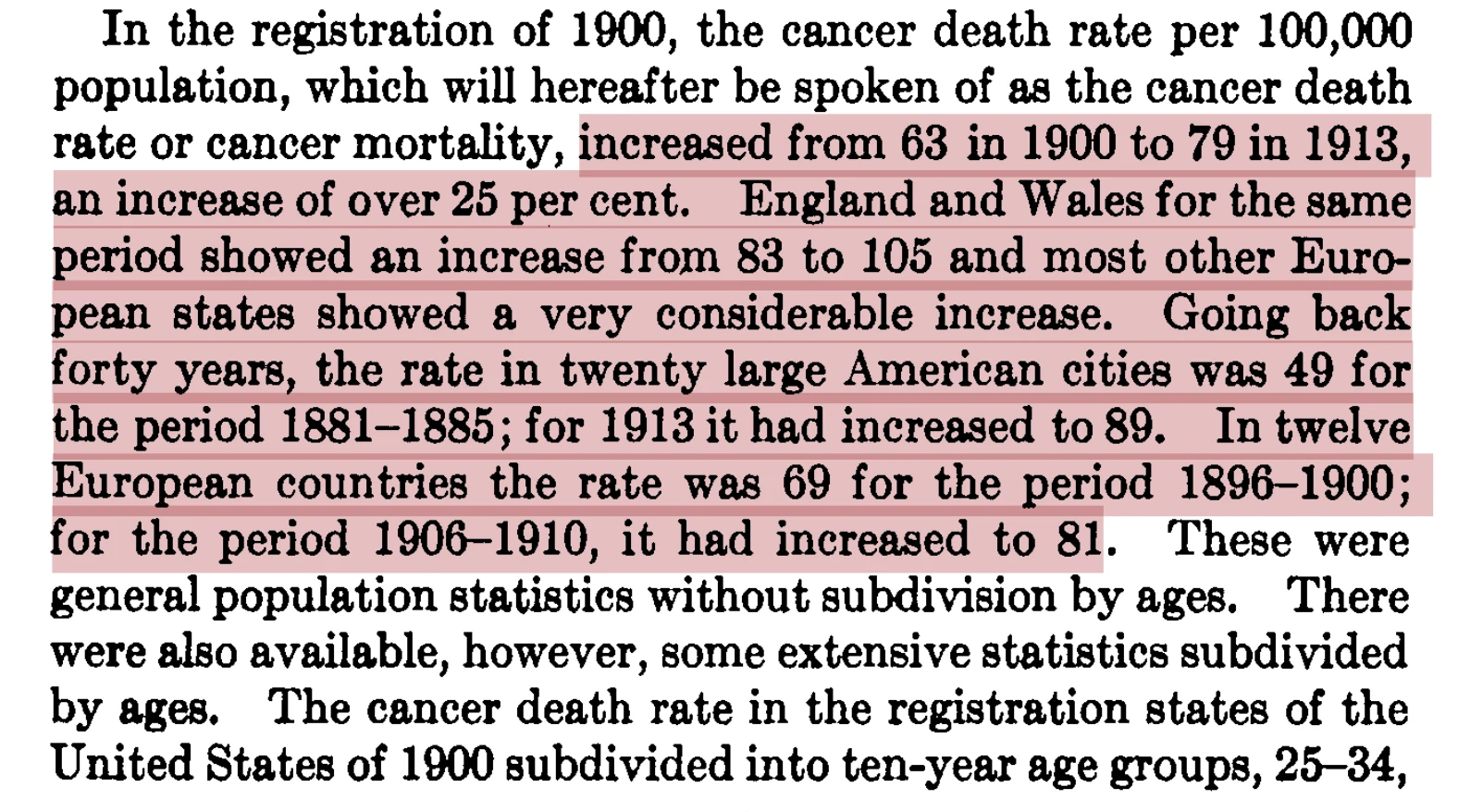
In 1913, this rate had already climbed to 89 cancer deaths a year per 100,000 inhabitants in the same twenty large American cities. It kept rising.

At that time, the only major invention was electric lighting. The others, although important, shared nothing of its spread, its massive adoption by the general population, and its impact on the circadian rhythm and our fundamental electromagnetic coherence.
The only one that could be set against it is simply the consequence of night-time electric lighting, and so of massive industrialisation: the advent of cars, reinforcing a sedentary life, the disconnection from the Earth, and the gradual disconnection from sunlight.
Today, cancers would be the second cause of death in the United States (about 20% of the causes of death), and are often the first cause in many developed countries; they would affect 5% of the population. In 2010, so already many years ago, they already represented 196 cancer deaths a year per 100,000 inhabitants of the general population in the United States. 4 times more cancer deaths in 2010 than a little over a hundred years earlier. Today, a single day in a modern hospital reminds us of the fragility of life, of the omnipresence of this sword of Damocles, and this regardless of the so-called “ageing of the population” and “improvement in diagnostic performance”, if we choose to truly open our eyes and then to believe them.

4. The candle is the warmest and most continuous spectrum in History.
Incandescent light is praised for its warmth, but the flame goes even further into the infrared spectrum, does not depend on artificial electricity, emits no artificial electromagnetic waves, does not flicker, and has always brought human beings together.
The physical temperature of the flame is 1000–1400 °C, higher than an incandescent filament).
Its continuous spectrum comes from the incandescence of carbon particles (hot soot) and emits weak combustion lines (Na, CH, C₂)
This means: no spectral “break”, no missing zone in the deep red, and excellent rendering of skin tones, wood, stone
Let us also learn the definition of a black body. It is an object that absorbs all the light it receives and which, when it is hot, emits light whose spectrum depends only on its temperature. In physics, the black body is the absolute reference for light and heat. It so happens that the candle is closer to a real black body than all modern LEDs.
4. The candle comes from a warm heritage engraved in our DNA
The candle reconnects us with human history. Since the mastery of fire, our eyes and brains have been programmed to relax in front of a flame, and in particular to talk with each other. Fire has (almost) always brought humans together. But, as I have said in many talks and podcasts, the mastery of fire remains an event that marks the beginning of human emancipation from the night.
Prolonged exposure to a fire obviously delays falling asleep, unlike total or near-total darkness (moons, stars). Thus, our Maison's candles are a perfect tool to light yourself with practicality, refinement and health, and to bring human beings closer together, but they remain inferior to darkness as far as your real physical health is concerned - excluding the social side of health.
In the end, choosing the candle means rejecting the aggression of high frequencies to find again the only light source almost aligned with our biology.
The only light sources perfectly aligned with our biology remain the celestial bodies.
"Like the wasps, before I finally went into winter quarters in November, I used to resort to the north-east side of Walden, which the sun, reflected from the pitch pine woods and the stony shore, made the fireside of the pond; it is so much pleasanter and wholesomer to be warmed by the sun while you can be, than by an artificial fire. I thus warmed myself by the still glowing embers which the summer, like a departed hunter, had left."
Anti-blue-light, anti-UV and anti-reflective treatments.
DAY, NIGHT, and NIGHT PRO.
Do the night-time lenses (NIGHT 4, NIGHT PRO, NIGHT DRIVE) have side effects?
How does the Maison Loïs Kedochim take the measurements to centre the lenses precisely on my pupils?
We simply do it right.
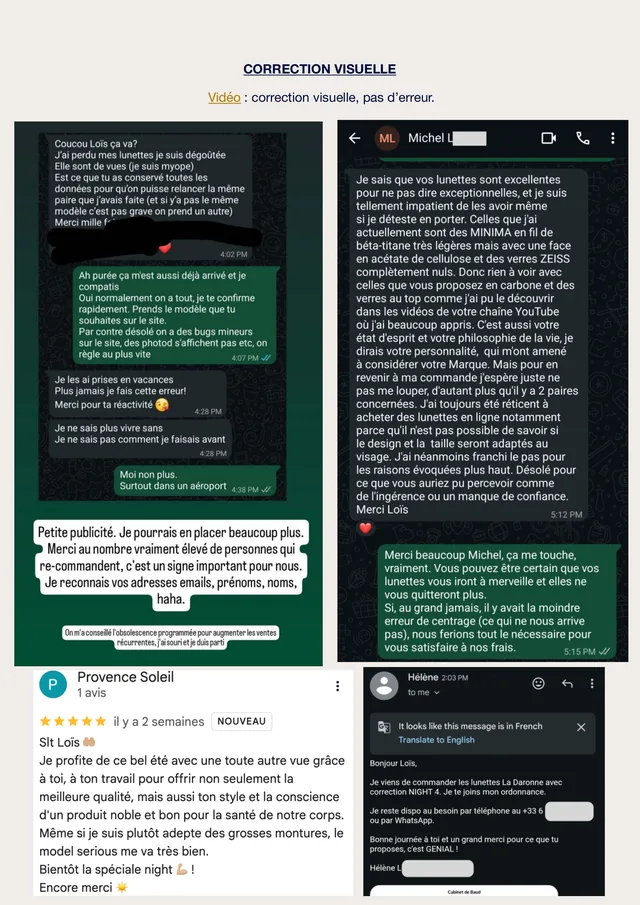
Visual correction, no mistakes.